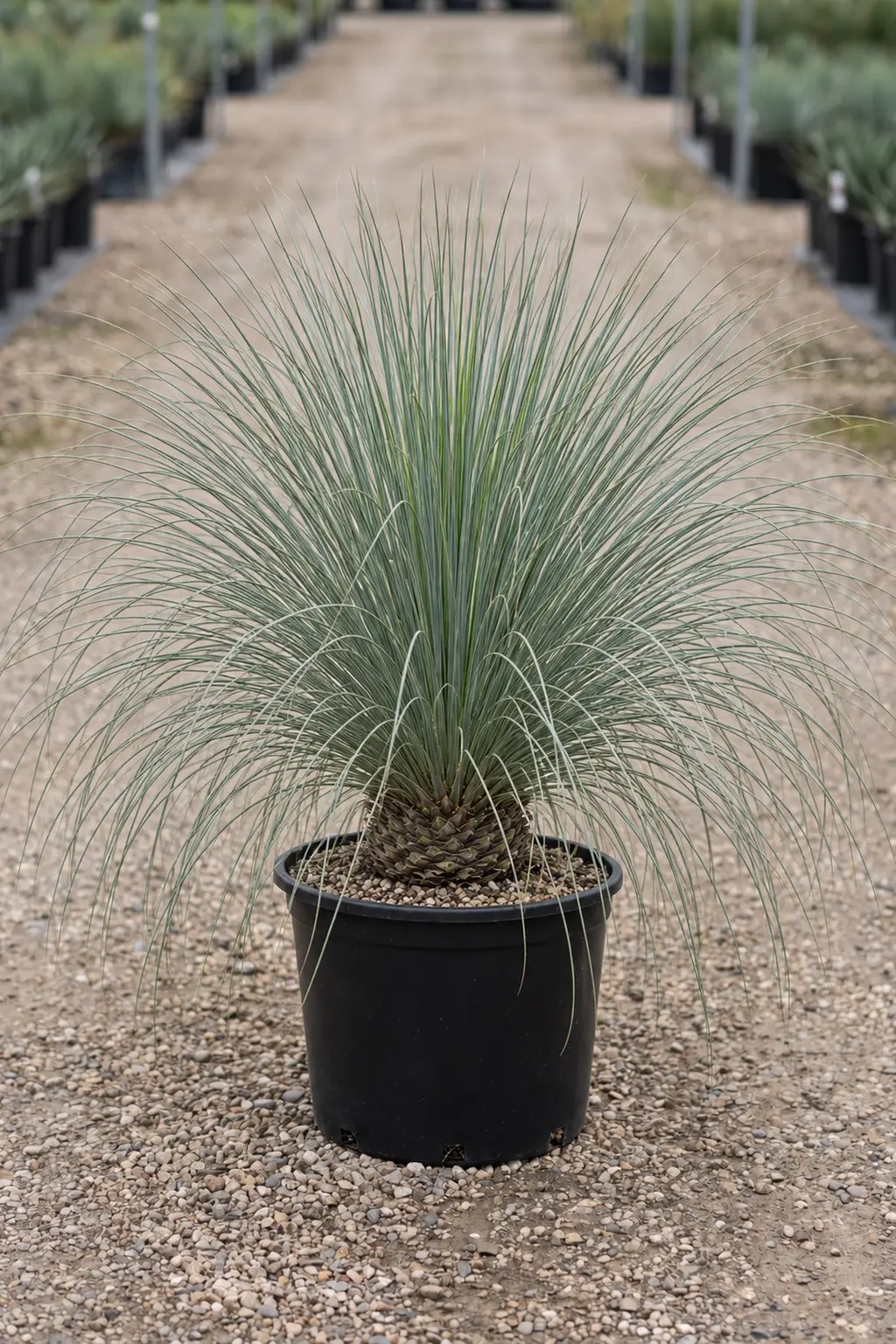
Dasylirion longissimum

Agave spp.: characteristics and care

The Agave spp., popularly known as agave, encompasses various species of succulent plants native to the Americas, prized for their rosettes of fleshy, rigid leaves often ending in a spine, in a wide variety of sizes, colors, and textures.

Their sculptural form and extremely low maintenance make them a highly sought-after option for both xeriscaping gardens and for pots and cactus and succulent compositions.

They tolerate extreme drought and poor, stony soils very well, provided they have excellent drainage.

At Ornacom, we directly cultivate each specimen, guaranteeing a balanced form and healthy development from the first years of planting.
Agave spp.: characteristics and care

The Agave spp., popularly known as agave, encompasses various species of succulent plants native to the Americas, prized for their rosettes of fleshy, rigid leaves often ending in a spine, in a wide variety of sizes, colors, and textures.

Their sculptural form and extremely low maintenance make them a highly sought-after option for both xeriscaping gardens and for pots and cactus and succulent compositions.

They tolerate extreme drought and poor, stony soils very well, provided they have excellent drainage.

At Ornacom, we directly cultivate each specimen, guaranteeing a balanced form and healthy development from the first years of planting.

Extended species profile

Verified cultivation data, designed so that any visitor can understand at a glance whether the plant is suitable for their climate and garden.

Crop

Exposure

Full sun or partial shade

Irrigation

2/5 · bajo — riego de apoyo en establecimiento y sequía; dejar secar parcialmente

Soil / moisture

Dry to cool; excellent drainage

Bloom

Variable

Climate

USDA Hardiness

8b–11

Compatible climates

BSh, BSk, Csa, Cfa with drainage

Tolerance to humid climate

2/5 · baja

Maintenance

Development

3/5 · 2–4 m · crecimiento lento

Pests

2/5 · baja — cochinillas, escamas, ácaros y pudrición de raíz/corona si falta drenaje

Pass

1/5 · muy bajo — aporte ligero en primavera; exceso de N reduce resistencia y compacta el crecimiento

  • Warning

The accepted name is D. quadrangulatum; excess water favors root/crown rot.

Extended species profile

Verified cultivation data, designed so that any visitor can understand at a glance whether the plant is suitable for their climate and garden.

Crop

Exposure

Full sun or partial shade

Irrigation

2/5 · bajo — riego de apoyo en establecimiento y sequía; dejar secar parcialmente

Soil / moisture

Dry to cool; excellent drainage

Bloom

Mainly summer

Climate

USDA Hardiness

8b–11

Compatible climates

BSh, BSk, Csa, Cfa with drainage

Tolerance to humid climate

2/5 · baja

Maintenance

Development

3/5 · 2–4 m · crecimiento lento

Pests

2/5 · baja — cochinillas, escamas, ácaros y pudrición de raíz/corona si falta drenaje

Pass

1/5 · muy bajo — aporte ligero en primavera; exceso de N reduce resistencia y compacta el crecimiento

  • Warning

The accepted name is D. quadrangulatum; excess water favors root/crown rot.

Dasylirion Longissimum

Contact our sales team

Get a quote