Betula papyrifera

Features and care

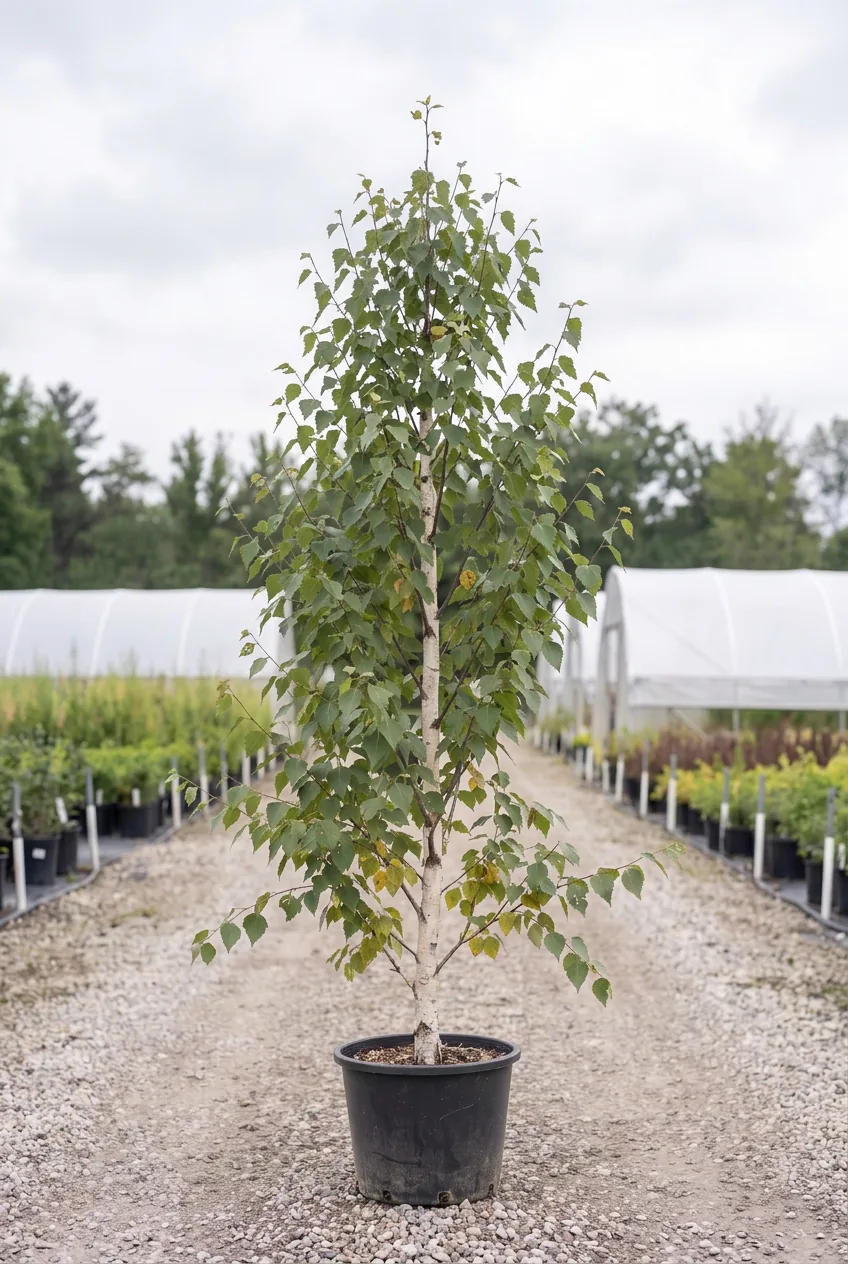
Betula papyrifera, known as the paper birch, is a deciduous tree prized for its light-colored bark and autumn foliage. It is used as a landscape specimen or in groups, especially in cool-climate compositions where the trunks provide contrast even during winter.

The bark peels off in thin sheets, and the crown becomes rounded with age, changing from oval to rounded. Its green, ovate, and toothed leaves turn yellow before falling. Separate male and female catkins appear during spring; the fruit clusters then release small winged seeds.

It reaches 15–25 m in height and exhibits rapid growth. It thrives in bright, semi-shaded locations with well-drained, acidic, cool to moist soil. It requires frequent watering to maintain consistent moisture without constant saturation. Its high tolerance to humidity and USDA hardiness rating of 2–7 make it suitable for cooler regions, with good frost resistance and less tolerance to sustained heat.

At Ornacom we cultivate each specimen directly, guaranteeing a balanced size and abundant flowering from the first years of planting.
Extended species profile

Verified cultivation data, designed so that any visitor can understand at a glance whether the plant is suitable for their climate and garden.

Crop

Exposure

Partial shade

Irrigation

ORN-WATERING 4/5 · high — maintain uniform moisture, increasing in heat; without saturation

Soil / moisture

Fresh to moist; acidic and drained

Bloom

Discreet

Climate

USDA Hardiness

Zones 2 – 7

Compatible climates

Dfb, Dfc, Cfb frío, Dfa

Tolerance to humid climate

ORN-HUM 5/5 · very high

Maintenance

Development

ORN-ALT 5/5 · 15–25 m · fast growth

Pests

ORN-PLAGA 3/5 · medium — sucking/boring insects and foliar or root fungi; monitor for water stress

Pass

ORN-FEEDING 2/5 · low — prioritize soil and organic matter; fertilize in spring only according to analysis and vigor

  • Warning

It does not tolerate prolonged heat or drought; it has shallow roots and is susceptible to borers under stress.

Contact our sales team

Get a quote