Yucca torreyi

Features and care

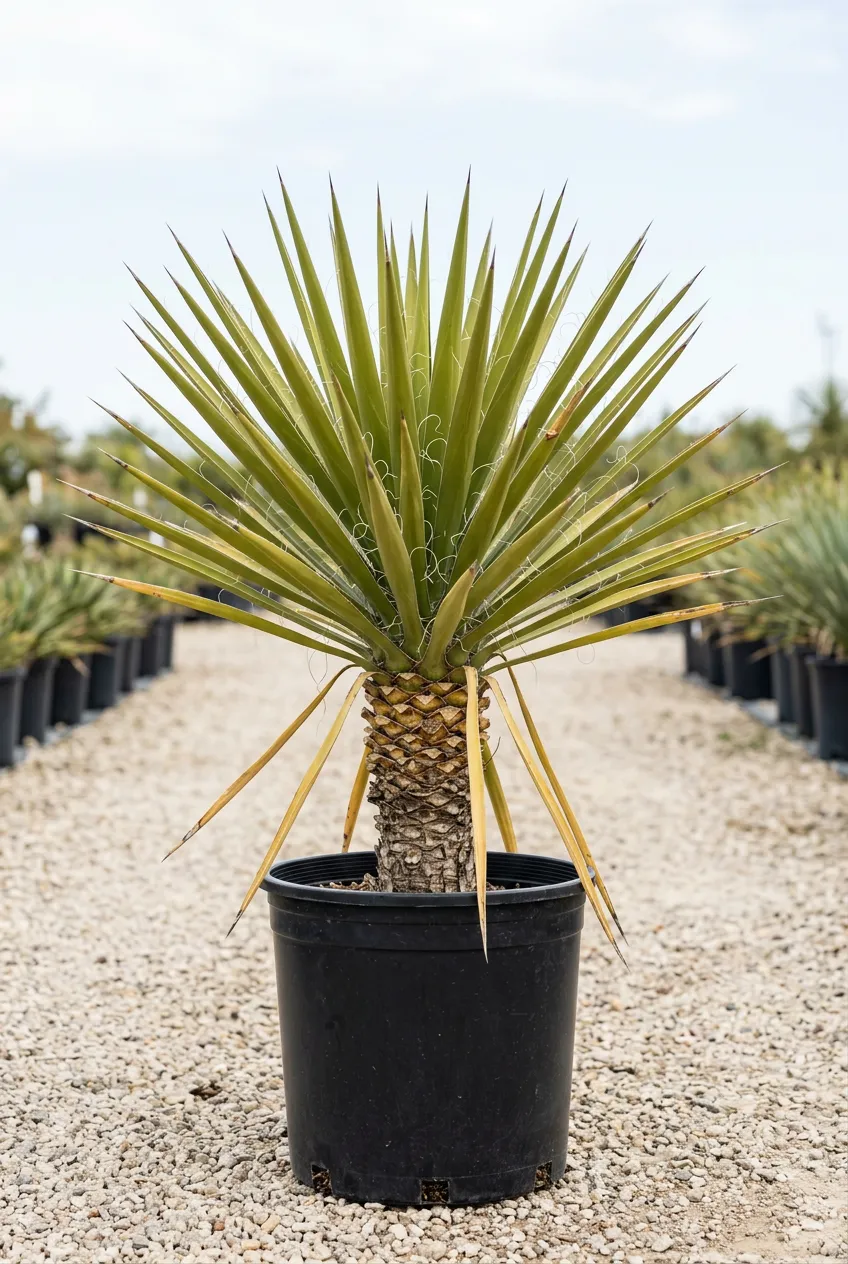
The Yucca torreyi, known as Torrey yucca or Torrey palm, is an arborescent plant of striking ornamental value native to the arid regions of the southwestern United States (Texas and New Mexico) and northern Mexico. It forms a thick, robust, and generally simple trunk—which may branch slightly with age—partially covered at its base by old leaf remnants and crowned by a dense rosette of very rigid, wide, dark green or glaucous leaves, ending in a very strong and sharp terminal spine.

Slow-growing but of considerable size, it can reach between 3 and 5 meters in height—and even more in its natural habitat—providing a very robust and sculptural architectural presence to the landscape. From spring to early summer, it produces a large, erect, dense panicle-shaped inflorescence that emerges above the foliage, filled with numerous white, bell-shaped flowers that sometimes show subtle purple hues. It is ideal as a solitary specimen or focal point in rock gardens, large desert gardens, low-water landscaping, and outdoor projects requiring an imposing and resilient structure.

It requires full sun and light, sandy, stony, or mineral soil with excellent drainage. It exceptionally tolerates intense heat, strong winds, moderate frosts, and prolonged drought once established; watering should be low and spaced out, allowing the substrate to dry completely between waterings. It is essential to avoid prolonged waterlogging at the base to keep its roots healthy and prevent rot.

Extended species profile

Verified cultivation data, designed so that any visitor can understand at a glance whether the plant is suitable for their climate and garden.

Crop

Exposure

Full sun

Irrigation

ORN-RIEGO 1/5 · very low — very spaced-out waterings; reduce almost completely in winter

Soil / moisture

Dry; excellent drainage

Bloom

Summer

Climate

USDA Hardiness

7–11

Compatible climates

BWh, BSh, BSk, Csa

Tolerance to humid climate

ORN-HUM 2/5 · low

Maintenance

Development

ORN-ALT 4/5 · 3–6 m · slow growth

Pests

ORN-PLAGA 2/5 · low — mealybugs, scale insects, mites and root/crown rot if drainage is lacking

Pass

ORN-FRUIT 1/5 · very low — light application in spring; excess N reduces resistance and compacts growth

  • Warning

Tips are rigid and dangerous; cold moisture and waterlogging cause rot.

Contact our sales team

Get a quote