Features and care
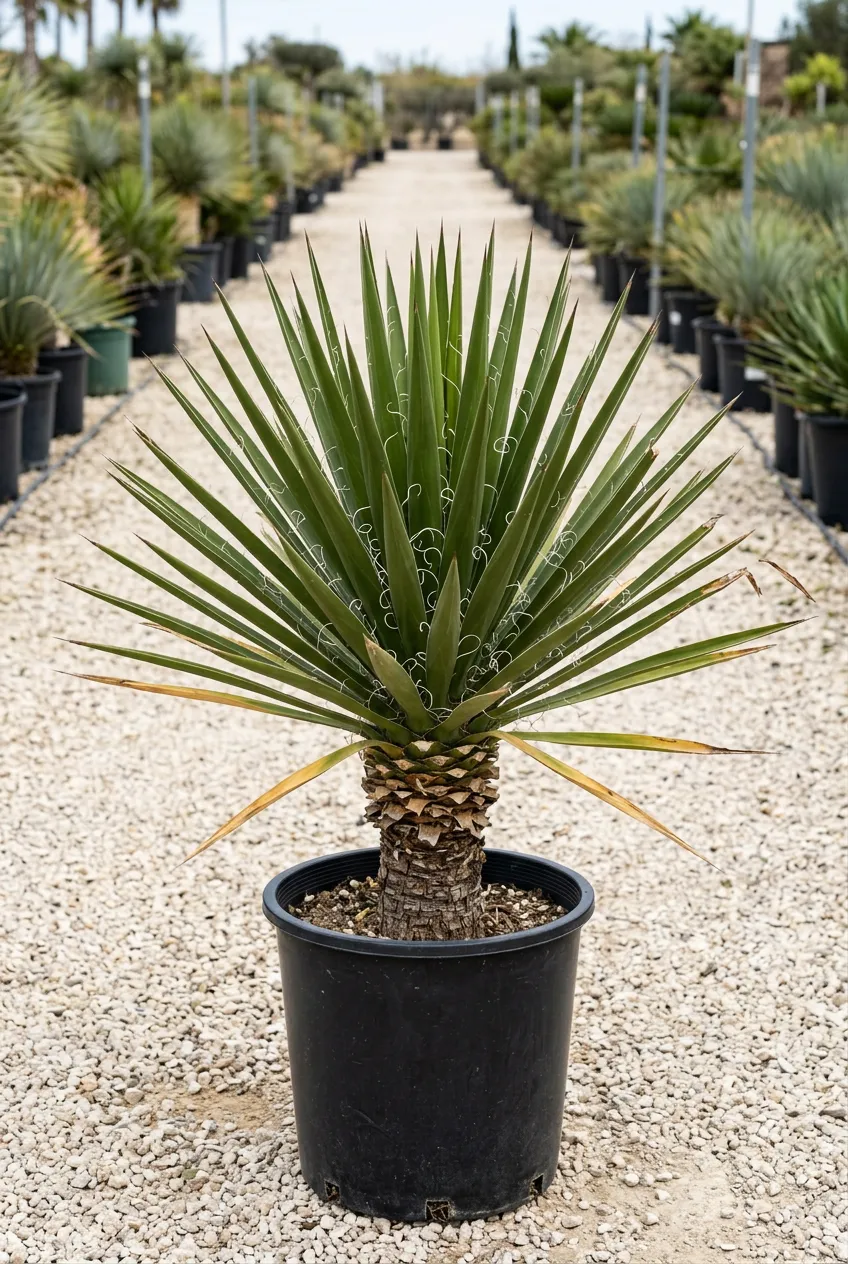
The Yucca potosina, known as the Potosí yucca or palm, is a tree-like plant of great ornamental value, native to the arid and semi-arid plateaus of north-central Mexico (mainly in the San Luis Potosí region and neighboring states). It forms a robust trunk, generally single or sparsely branched in maturity, covered at its base by the fibrous remains of old leaves and crowned by a dense, symmetrical rosette of stiff, narrow leaves of an attractive glaucous or bluish-green color that end in a strong terminal spine.
Slow-growing yet elegant, this plant can reach a height of 2 to 5 meters over the years, lending a refined architectural presence to the landscape. From spring to early summer, it produces an impressive, erect, dense panicle-like inflorescence that rises above the foliage, covered in numerous white, bell-shaped flowers. It is ideal as a specimen plant or focal point in rock gardens, desert gardens, Mediterranean landscaping, and low-water-use xeriscaping projects.
It requires full sun and light, sandy, stony, or mineral soil with excellent drainage. It is exceptionally tolerant of intense heat, wind, moderate frost, and prolonged drought once established; watering should be low and infrequent, allowing the substrate to dry out completely between waterings. It is essential to avoid prolonged waterlogging at the base to maintain a healthy root system and prevent rot.
8/10 L