Populus italica

Features and care

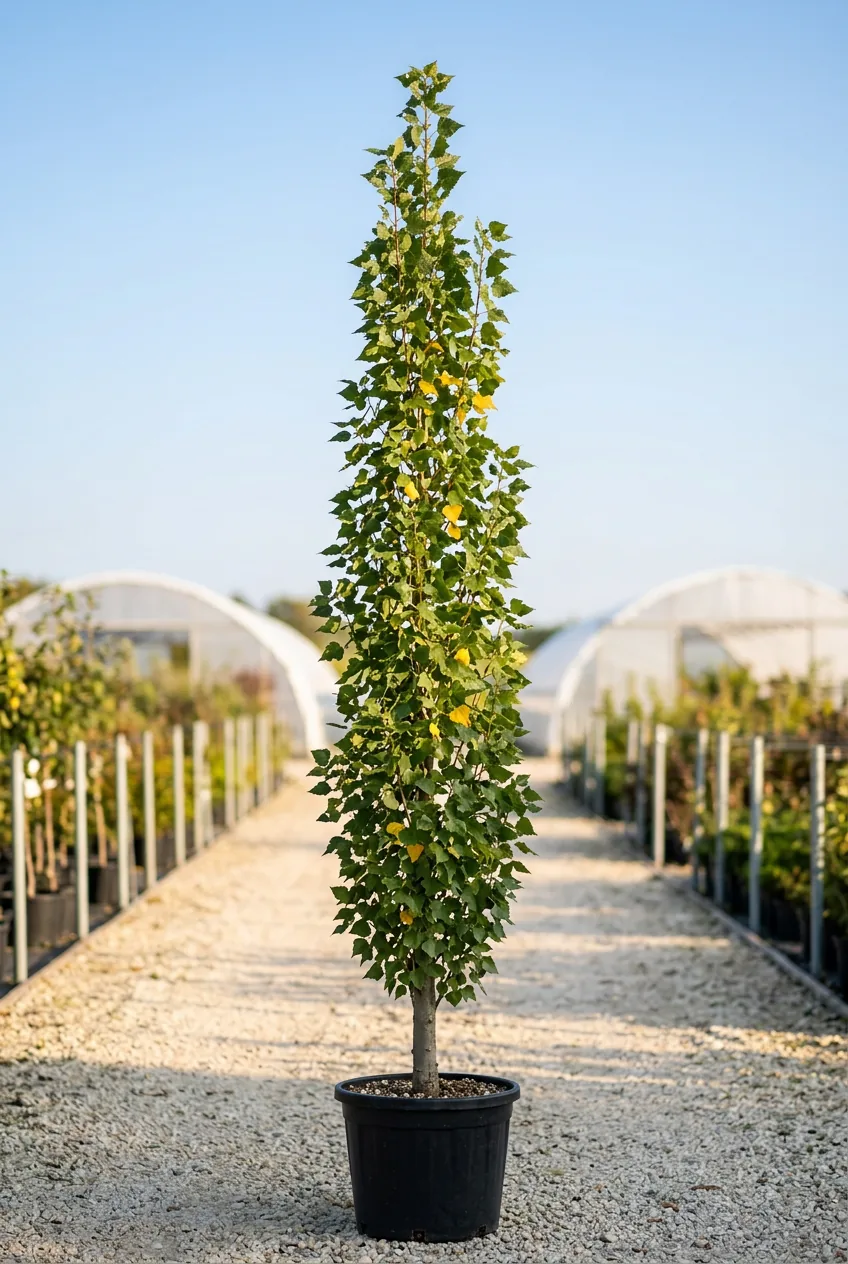
Populus italica, now identified as Populus nigra ‘Italica’ and known as the Lombardy poplar, is a deciduous tree with a columnar silhouette. Its narrow profile has been used in avenues and windbreaks, providing a recognisable vertical element in large gardens and open landscapes.

Its short, ascending branches form a dense column. The leaves are triangular or oval, green and toothed, turning yellow in autumn. Small, barely noticeable reddish flowers appear in spring. The bark changes from greenish grey on young growth to darker and fissured on the mature trunk.

In full sun it can reach 20 to 30 m and grows very fast. It needs cool to moist, well-drained soil, with high, regular watering to keep moisture even. Permanent saturation should be avoided despite its high tolerance to humid air. Its USDA 3–9 hardiness allows it to withstand winter frosts and to be used in climates with marked seasons.

At Ornacom we cultivate each specimen directly, guaranteeing a balanced size and abundant flowering from the first years of planting.
Extended species profile

Verified cultivation data, designed so any visitor can see at a glance whether the plant suits their climate and garden.

Cultivation

Exposure

Full sun

Watering

ORN-RIEGO 4/5 · high — keep moisture even, increasing in heat; avoid waterlogging

Soil / moisture

Cool to moist; well drained

Flowering

Inconspicuous

Climate

USDA hardiness

Zones 3 – 9

Compatible climates

Cfa, Dfa, Dfb, BSk, Csa

Humid climate tolerance

ORN-HUM 4/5 · high

Maintenance

Growth

ORN-ALT 5/5 · 20–30 m · very fast growth

Pests

ORN-PLAGA 4/5 · high — aphids, beetles, caterpillars, rusts and cankers

Fertilising

ORN-ABONO 2/5 · low — prioritise soil and organic matter; fertilise in spring only based on analysis and vigour

  • Warning

Not a separate species; invasive roots, suckers and high susceptibility to cankers.

Contact our sales team

Get a quote