Quercus robur

Features and care

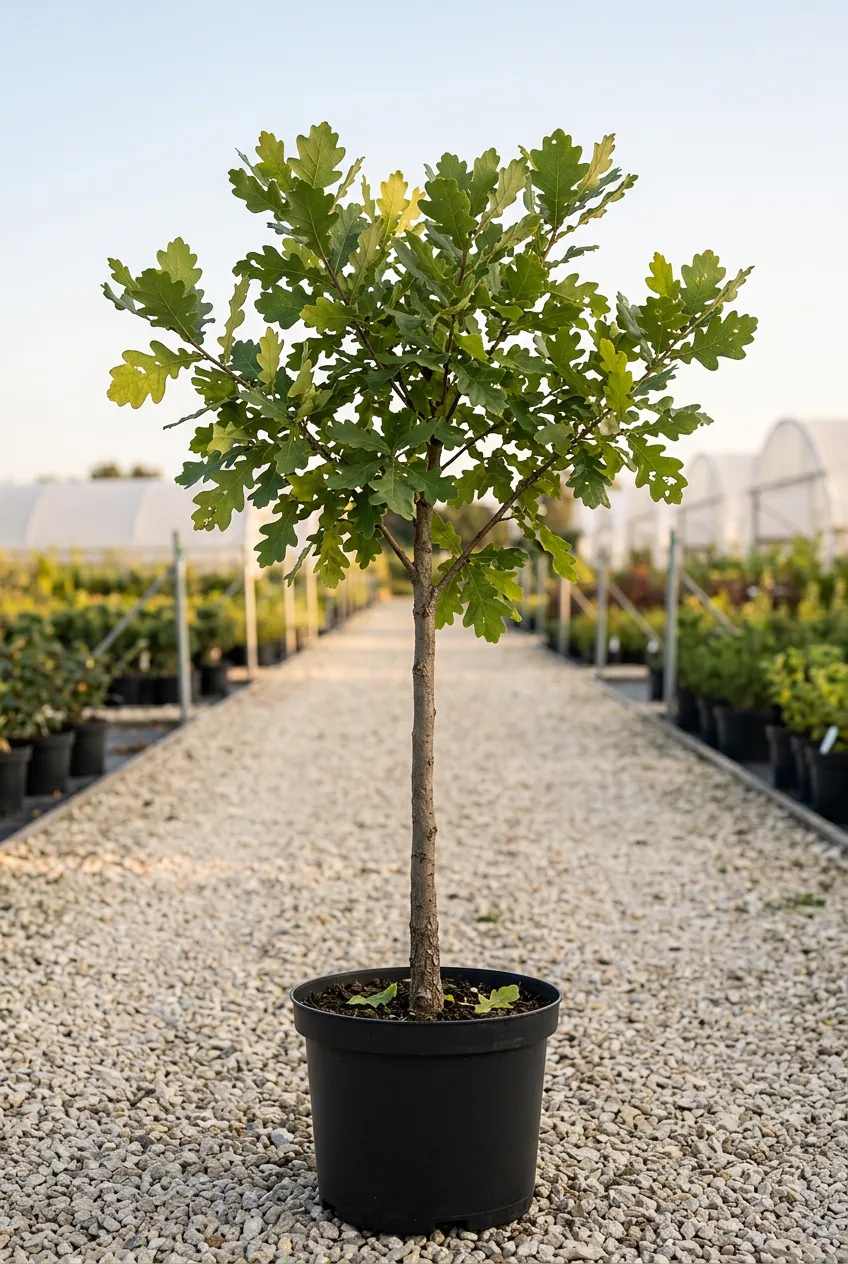
Quercus robur, known as the English oak or pedunculate oak, is a deciduous tree with a broad crown and spreading branches. Its stature makes it a structural element in parks, large gardens and open spaces, where it can develop wide shade and a silhouette that stands out in every season.

The sturdy trunk develops deeply fissured bark with age. The leaves are lobed, green and have small ear-like lobes at the base. In spring it produces inconspicuous flowers, including male flowers in catkins. Its acorns stand out because they are carried on long stalks, which makes the tree easy to recognise.

It reaches 20 to 35 m with slow to moderate growth. It needs full light and cool to moist soil, and tolerates brief flooding. Its watering regime is very high: frequent, deep waterings without prolonging hypoxia at the roots. It has very high tolerance to humid air and good resistance to USDA 4–8 frosts.

At Ornacom we cultivate each specimen directly, guaranteeing a balanced size and abundant flowering from the first years of planting.
Extended species profile

Verified cultivation data, designed so any visitor can see at a glance whether the plant suits their climate and garden.

Cultivation

Exposure

Full sun

Watering

ORN-RIEGO 5/5 · very high — frequent, deep watering; adjust to avoid prolonged hypoxia

Soil / moisture

Cool to moist; tolerates brief flooding

Flowering

Inconspicuous

Climate

USDA hardiness

Zones 4 – 8

Compatible climates

Cfb, Cfa cool, Dfb, Csb

Humid climate tolerance

ORN-HUM 5/5 · very high

Maintenance

Growth

ORN-ALT 5/5 · 20–35 m · slow to moderate growth

Pests

ORN-PLAGA 4/5 · high — processionary caterpillars, borers, powdery mildew and decline/Phytophthora

Fertilising

ORN-ABONO 2/5 · low — prioritise soil and organic matter; fertilise in spring only based on analysis and vigour

  • Warning

Very large tree; suffers in prolonged heat and drought. Watch for decline and processionary caterpillars.

Extended species profile

Verified cultivation data, designed so any visitor can see at a glance whether the plant suits their climate and garden.

Cultivation

Exposure

Full sun

Watering

ORN-RIEGO 5/5 · very high — frequent, deep watering; adjust to avoid prolonged hypoxia

Soil / moisture

Cool to moist; tolerates brief flooding

Flowering

Inconspicuous

Climate

USDA hardiness

Zones 4 – 8

Compatible climates

Cfb, Cfa cool, Dfb, Csb

Humid climate tolerance

ORN-HUM 5/5 · very high

Maintenance

Growth

ORN-ALT 5/5 · 20–35 m · slow to moderate growth

Pests

ORN-PLAGA 4/5 · high — processionary caterpillars, borers, powdery mildew and decline/Phytophthora

Fertilising

ORN-ABONO 2/5 · low — prioritise soil and organic matter; fertilise in spring only based on analysis and vigour

  • Warning

Very large tree; suffers in prolonged heat and drought. Watch for decline and processionary caterpillars.

Contact our sales team

Get a quote