Ulmus minor

Features and care

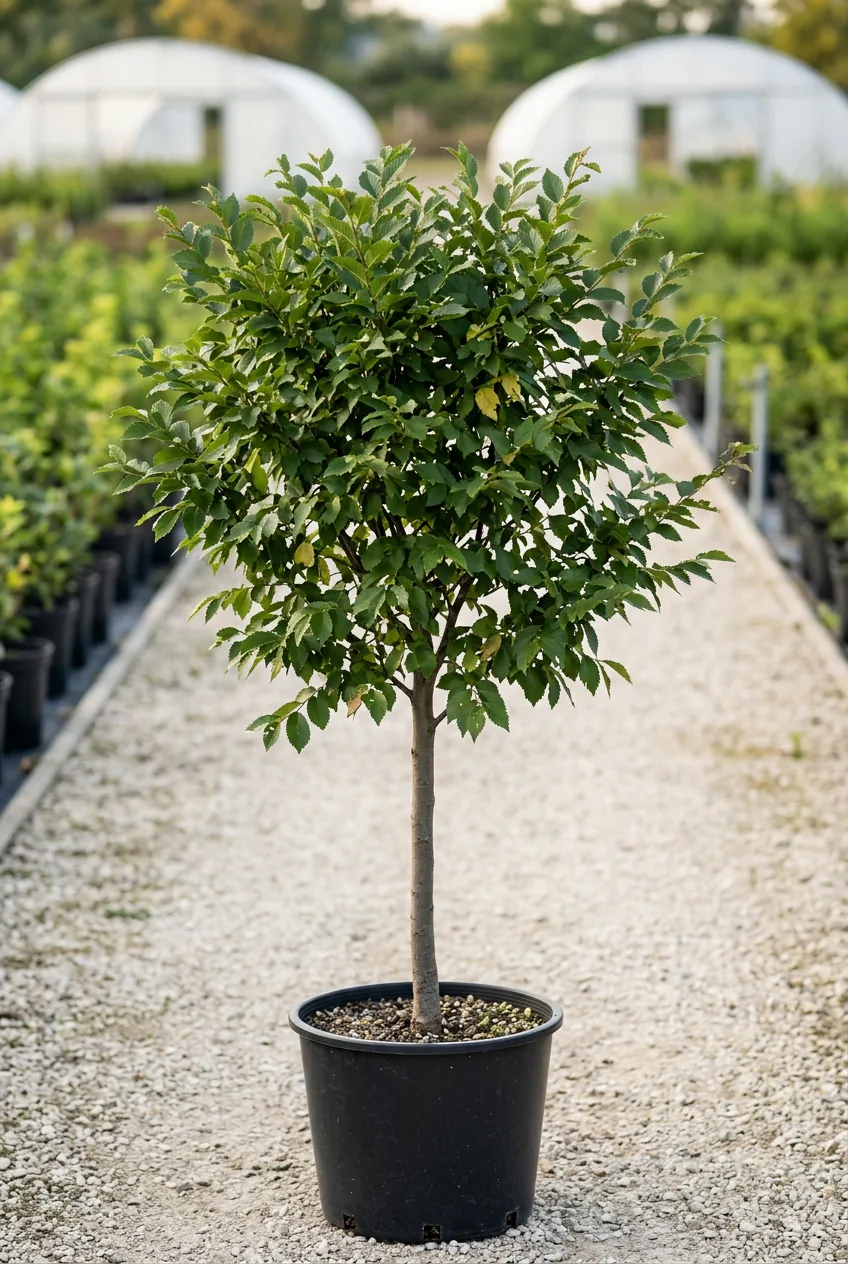
Ulmus minor, known as the field elm, is a fast-growing deciduous tree with ascending branches. Its crown and shade have had a prominent presence in squares, promenades and riverside landscapes, where its form brings structure both in leaf and after leaf fall.

The alternate leaves are oval or elliptical, with an asymmetrical base and a doubly serrated edge. The small flowers gather in clusters before the leaves emerge, at the end of winter. Later, flat, papery, pale green samaras appear, while the foliage can turn yellow in autumn.

In sun it reaches 20 to 30 m. It adapts to dry to moist, well-drained ground, with moderate watering through deep, spaced-out waterings. It tolerates high humidity and withstands frosts within USDA 5–9. The soil should stay aerated between waterings, without remaining saturated, and provide enough water during establishment to keep up with its growth rate.

At Ornacom we cultivate each specimen directly, guaranteeing a balanced size and abundant flowering from the first years of planting.
Extended species profile

Verified cultivation data, designed so any visitor can see at a glance whether the plant suits their climate and garden.

Cultivation

Exposure

Full sun

Watering

ORN-RIEGO 3/5 · medium — adaptable; deep, spaced-out watering without keeping the soil saturated

Soil / moisture

Dry to moist; well drained

Flowering

Inconspicuous

Climate

USDA hardiness

Zones 5 – 9

Compatible climates

Cfb, Cfa, Csa, Dfb mild

Humid climate tolerance

ORN-HUM 4/5 · high

Maintenance

Growth

ORN-ALT 5/5 · 20–30 m · fast growth

Pests

ORN-PLAGA 5/5 · very high — Dutch elm disease, bark beetles, elm leaf beetle and other vascular diseases

Fertilising

ORN-ABONO 2/5 · low — prioritise soil and organic matter; fertilise in spring only based on analysis and vigour

  • Warning

High susceptibility to Dutch elm disease depending on the clone; vigorous roots and suckers.

Contact our sales team

Get a quote