Ligustrum ovalifolium
Characteristics and care
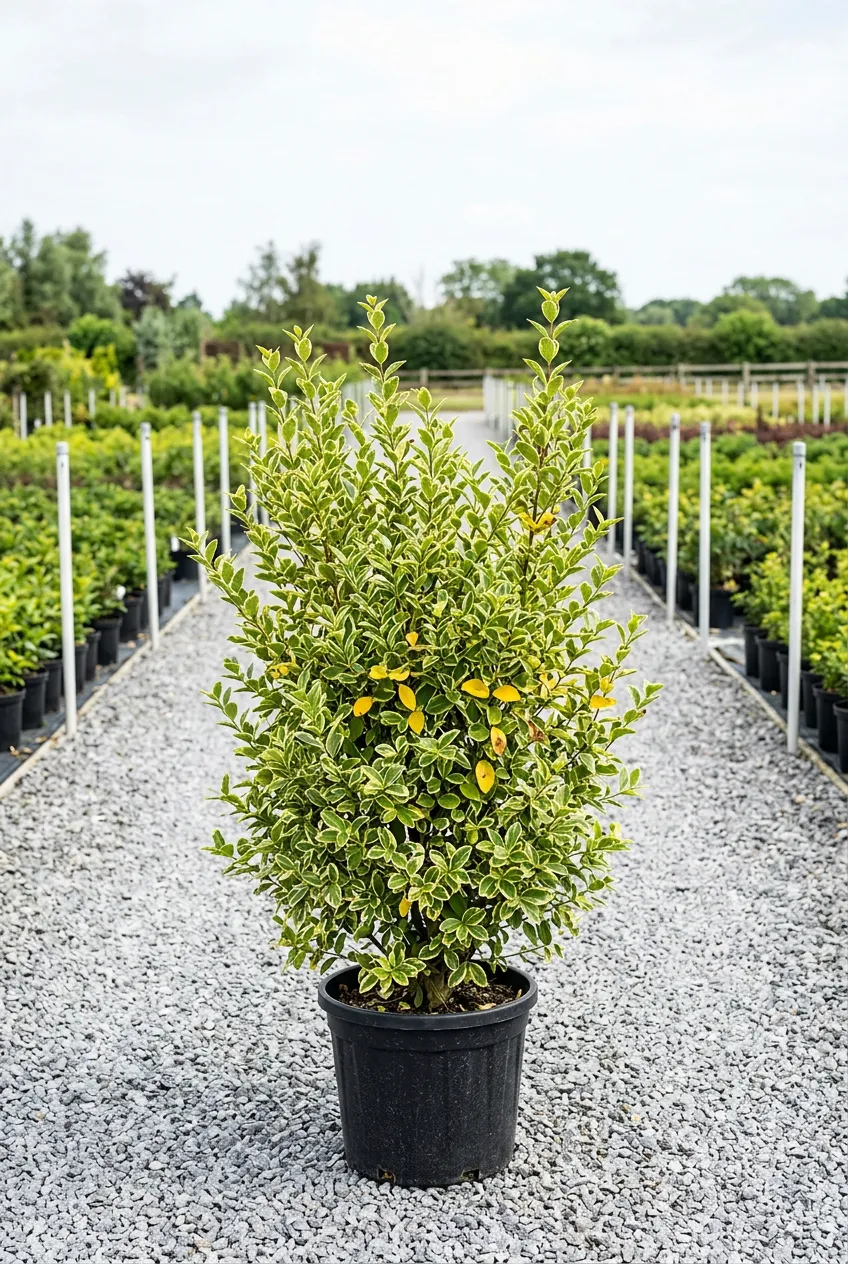
Ligustrum ovalifolium, commonly known as California privet, oval-leaved privet or ligustrina, is a highly ornamental evergreen shrub native to Japan. It has a dense, branched habit, with numerous woody stems that form a compact, rounded crown. The opposite, oval, dark glossy-green leaves have a firm texture and a very even appearance, making the plant especially well suited to hedges and borders.
Fast-growing and very hardy, it can reach between 2 and 5 meters in height, although it stands up very well to pruning and can be kept at different sizes and shapes. In spring and early summer it produces terminal inflorescences that are elongated and branched, made up of numerous small, pleasantly fragrant white flowers. It may later develop small, rounded, dark fruits, although these are toxic if ingested. Its dense foliage makes it useful as an ornamental plant, a screen, a privacy hedge and a structural element in the garden.
It requires full sun or partial shade, adapting to a range of light conditions, though good exposure encourages more compact growth and abundant foliage. It prefers fertile soils, rich in organic matter, with good drainage, though once established it is fairly tolerant of different ground types. It withstands moderate dry spells as well as cold temperatures, and can tolerate frost. Watering should be regular while it is getting established, especially in warm weather, while mature plants need less water. It is important to avoid prolonged waterlogging and to carry out periodic pruning to control its size, keep the plant dense and maintain the desired shape.
Detailed species profile
Verified cultivation data, designed so that any visitor can see at a glance whether the plant suits their climate and garden.
Cultivation
Exposure
Watering
4/5 · high — keep moisture even, increasing in hot weather; do not waterlog
Soil / moisture
Moist to wet; well drained
Flowering
Summer
Climate
USDA hardiness
5–8
Suitable climates
Cfb, Cfa, Dfb, Csb
Humidity tolerance
4/5 · high
Maintenance
Growth
4/5 · 3–5 m · rapid growth
Pests
3/5 · medium — aphids, scale insects, mites and foliar/root diseases depending on conditions
Fertilizer
2/5 · low — organic matter or slow-release fertilizer in spring; adjust to vigor and soil analysis
Warning
It can be invasive; the fruits are toxic. Avoid prolonged waterlogging.
Detailed species profile
Verified cultivation data, designed so that any visitor can see at a glance whether the plant suits their climate and garden.
Cultivation
Exposure
Watering
4/5 · high — keep moisture even, increasing in hot weather; do not waterlog
Soil / moisture
Moist to wet; well drained
Flowering
Summer
Climate
USDA hardiness
Suitable climates
Cfb, Cfa, Dfb, Csb
Humidity tolerance
4/5 · high
Maintenance
Growth
4/5 · 3–5 m · rapid growth
Pests
3/5 · medium — aphids, scale insects, mites and foliar/root diseases depending on conditions
Fertilizer
2/5 · low — organic matter or slow-release fertilizer in spring; adjust to vigor and soil analysis
Warning
It can be invasive; the fruits are toxic. Avoid prolonged waterlogging.
Contact our sales team
Get a quote