Carpinus betulus

Features and care

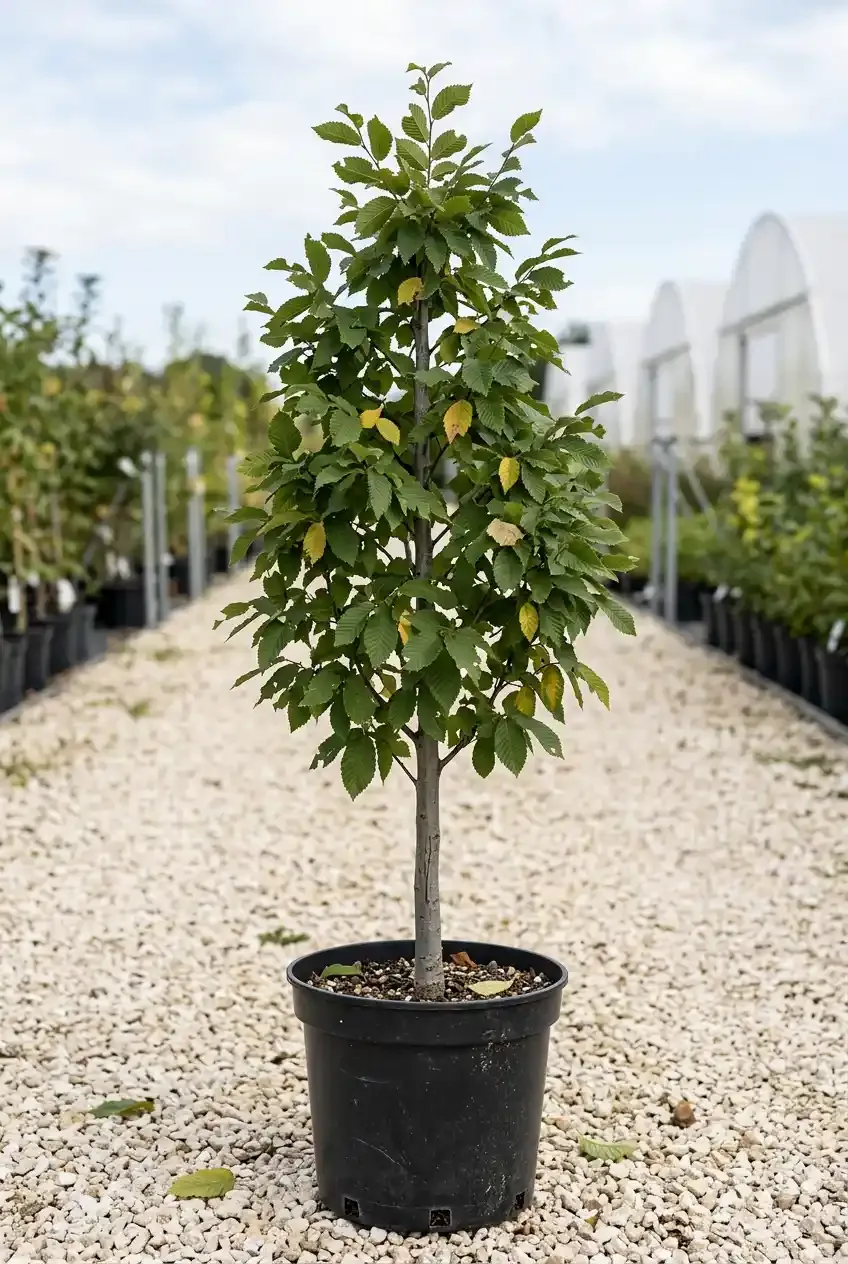
Carpinus betulus, commonly known as the common hornbeam, is a deciduous tree with dense branching and an orderly appearance. Besides being used as a shade tree and specimen tree, it can be used to create hedges and screens that take advantage of its dense structure and its response to pruning.

The leaves are oval, alternate, and clearly veined, with doubly serrated edges and a dark green color. In autumn, they turn yellow. The spring flowering is arranged in inconspicuous catkins and produces small fruits accompanied by three-lobed bracts, which add detail to the crown at the end of the season.

Its growth rate is slow to medium, and it can reach 15 to 25 meters without pruning. It adapts to sun and partial shade in cool to moist, well-drained soil. It requires ample watering and regular moisture, but should not be waterlogged. It tolerates high humidity and winter frosts typical of USDA hardiness zones 4–8 very well.

At Ornacom we cultivate each specimen directly, guaranteeing a balanced size and abundant flowering from the first years of planting.
Extended species profile

Verified cultivation data, designed so that any visitor can understand at a glance whether the plant is suitable for their climate and garden.

Crop

Exposure

Full sun or partial shade

Irrigation

ORN-WATERING 4/5 · high — maintain uniform moisture, increasing in heat; without saturation

Soil / moisture

Fresh to moist; well-drained

Bloom

Discreet

Climate

USDA Hardiness

Zones 4 – 8

Compatible climates

Cfb, Cfa, Dfb, Csb

Tolerance to humid climate

ORN-HUM 5/5 · very high

Maintenance

Development

ORN-ALT 5/5 · 15–25 m · slow to medium growth

Pests

ORN-PLAGA 5/5 · very high — processionary caterpillar, bark beetles, Diplodia and pine nematode as quarantine risk

Pass

ORN-FERTILIZER 1/5 · very low — usually organic matter or slow release in spring is sufficient; avoid excess N

  • Warning

It tolerates humidity, but not chronic waterlogging; it suffers from extreme heat and drought.

Contact our sales team

Get a quote