Cedrus libani

Features and care

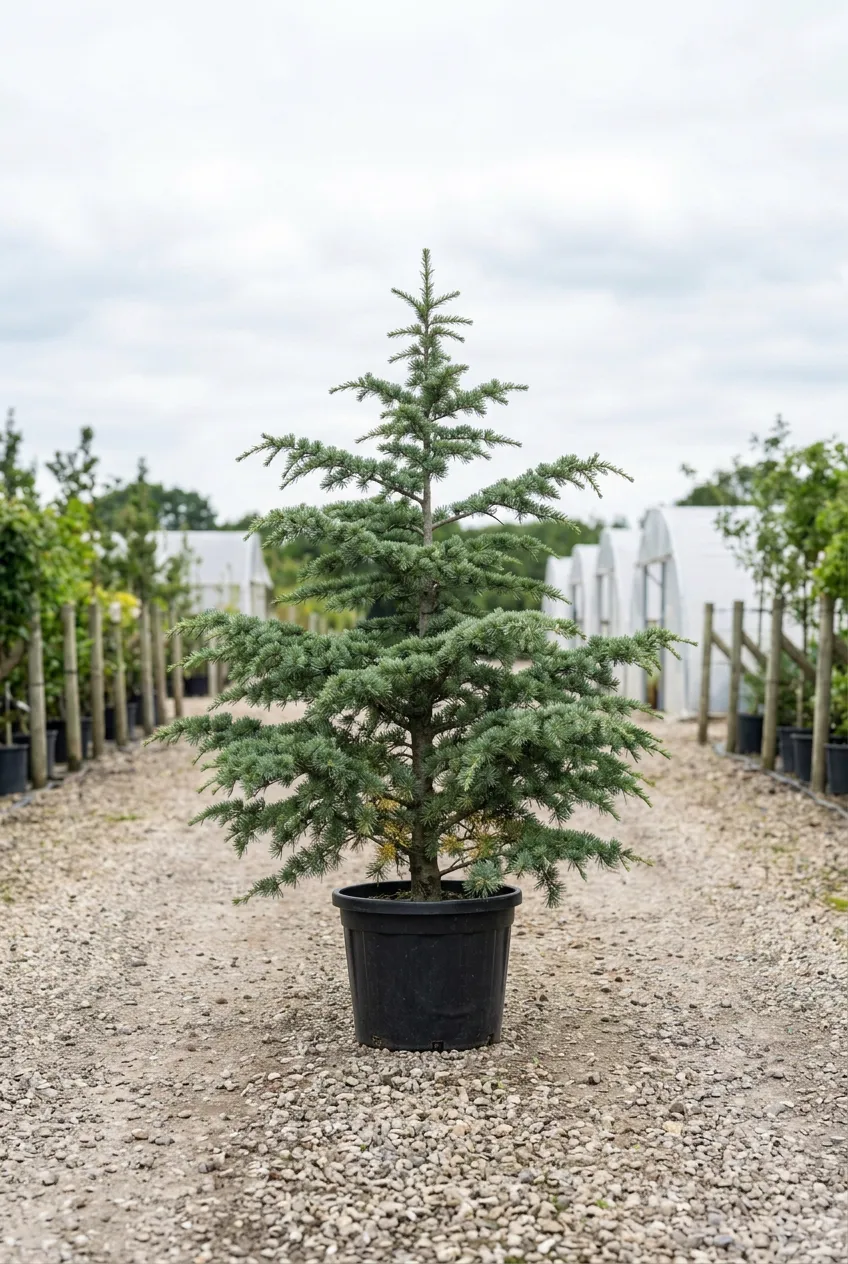
The Cedrus libani, known as the cedar of Lebanon, is a large, slow- to moderately growing evergreen tree native to the mountainous regions of the eastern Mediterranean. It can reach between 20 and 40 meters in height, developing a robust trunk and a broad crown, which in young specimens has a pyramidal shape and over time acquires a more expansive and characteristic structure. Its leaves are needle-like, short, and stiff, ranging in color from dark green to grayish-green, and are grouped in small fascicles on short branches. It is a highly valued ornamental species due to its majestic stature, longevity, and striking presence in landscapes.

During its development, it produces erect, oval or cylindrical cones, green in color, which later turn brownish as they mature. Its main branches are arranged horizontally, forming a staggered and broad structure that becomes especially characteristic of adult specimens. It is a hardy species, capable of adapting to different soil conditions as long as there is good drainage, and it tolerates cold climates and periods of drought well once established.

At Ornacom we cultivate each specimen directly, guaranteeing a balanced size, a uniform structure and vigorous development from the first years of planting.
Extended species profile

Verified cultivation data, designed so that any visitor can understand at a glance whether the plant is suitable for their climate and garden.

Crop

Exposure

Full sun

Irrigation

2/5 · bajo — riego de apoyo en establecimiento y sequía; dejar secar parcialmente

Soil / moisture

Dry to cool; well drained

Bloom

Spring-summer

Climate

USDA Hardiness

5–9

Compatible climates

Csa, Csb, Dfb soft, Cfb dry

Tolerance to humid climate

2/5 · baja

Maintenance

Development

5/5 · 20–35 m · crecimiento lento

Pests

3/5 · media — pulgones, procesionaria, ácaros y pudriciones de raíz en mal drenaje

Pass

1/5 · muy bajo — normalmente basta materia orgánica o liberación lenta en primavera; evitar exceso de N

  • Warning

It prefers dry summers; persistent humidity and saturated soil favor rot.

Extended species profile

Verified cultivation data, designed so that any visitor can understand at a glance whether the plant is suitable for their climate and garden.

Crop

Exposure

Full sun

Irrigation

2/5 · bajo — riego de apoyo en establecimiento y sequía; dejar secar parcialmente

Soil / moisture

Dry to cool; well drained

Bloom

Summer

Climate

USDA Hardiness

5–9

Compatible climates

Csa, Csb, Dfb soft, Cfb dry

Tolerance to humid climate

2/5 · baja

Maintenance

Development

5/5 · 20–35 m · crecimiento lento

Pests

3/5 · media — pulgones, procesionaria, ácaros y pudriciones de raíz en mal drenaje

Pass

1/5 · muy bajo — normalmente basta materia orgánica o liberación lenta en primavera; evitar exceso de N

  • Warning

It prefers dry summers; persistent humidity and saturated soil favor rot.

Contact our sales team

Get a quote