Pinus pinaster

Features and care

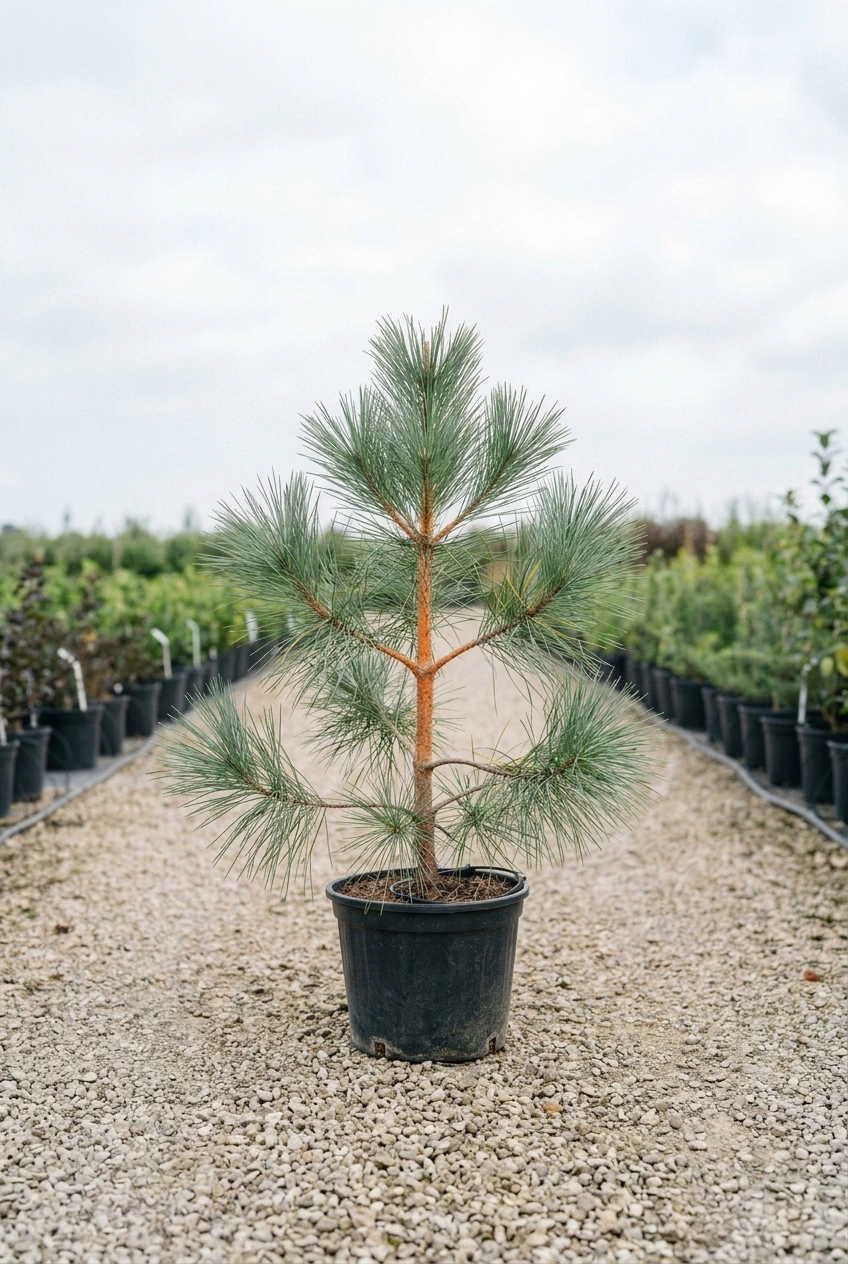
The maritime pine (Pinus pinaster), also known as the pinaster pine, is a large, fast-growing evergreen tree native to the coastal regions of the western Mediterranean and the European Atlantic. It can reach 20 to 30 meters in height, developing a straight, robust trunk and a broad, irregular crown that becomes somewhat open with age. Its needle-like leaves are long, stiff, and a deep green color, growing in pairs and densely arranged on the branches. It is a highly valued species for its hardiness, resistance to harsh environmental conditions, and ornamental appeal in large spaces.

During its development, it produces large, conical, brownish cones that remain on the tree for several years. Its bark is thick, grayish in young specimens, and progressively darker and reddish with age, forming characteristic plates. It is a species particularly resistant to drought, wind, and sandy or poor soils, making it well-suited to coastal areas and temperate climates. Its natural form makes it a suitable choice for parks, large gardens, and plantations where it can fully develop its structure.

At Ornacom we cultivate each specimen directly, guaranteeing a balanced size, a uniform structure and vigorous development from the first years of planting.
Extended species profile

Verified cultivation data, designed so that any visitor can understand at a glance whether the plant is suitable for their climate and garden.

Crop

Exposure

Full sun

Irrigation

ORN-RIEGO 2/5 · low — supplemental irrigation during establishment and drought; allow to partially dry

Soil / moisture

Dry to fresh; acidic and drained

Bloom

Spring-summer

Climate

USDA Hardiness

7–10

Compatible climates

Csb, Csa, Oceanic Cfb, BSh

Tolerance to humid climate

ORN-HUM 3/5 · medium

Maintenance

Development

ORN-ALT 5/5 · 20–35 m · fast growth

Pests

ORN-PLAGA 5/5 · very high — processionary caterpillar, bark beetles, Diplodia and pine nematode as quarantine risk

Pass

ORN-FERTILIZER 1/5 · very low — usually organic matter or slow release in spring is sufficient; avoid excess N

  • Warning

Tolerates Atlantic humidity, but not waterlogging; susceptible to processionary caterpillars and can be invasive.

Extended species profile

Verified cultivation data, designed so that any visitor can understand at a glance whether the plant is suitable for their climate and garden.

Crop

Exposure

Full sun

Irrigation

ORN-RIEGO 2/5 · low — supplemental irrigation during establishment and drought; allow to partially dry

Soil / moisture

Dry to fresh; acidic and drained

Bloom

Summer

Climate

USDA Hardiness

7–10

Compatible climates

Csb, Csa, Oceanic Cfb, BSh

Tolerance to humid climate

ORN-HUM 3/5 · medium

Maintenance

Development

ORN-ALT 5/5 · 20–35 m · crecimiento rápido

Pests

ORN-PLAGA 5/5 · very high — processionary caterpillar, bark beetles, Diplodia and pine nematode as quarantine risk

Pass

ORN-FERTILIZER 1/5 · very low — usually organic matter or slow release in spring is sufficient; avoid excess N

  • Warning

Tolerates Atlantic humidity, but not waterlogging; susceptible to processionary caterpillars and can be invasive.

Contact our sales team

Get a quote