Pinus pinea

Features and care

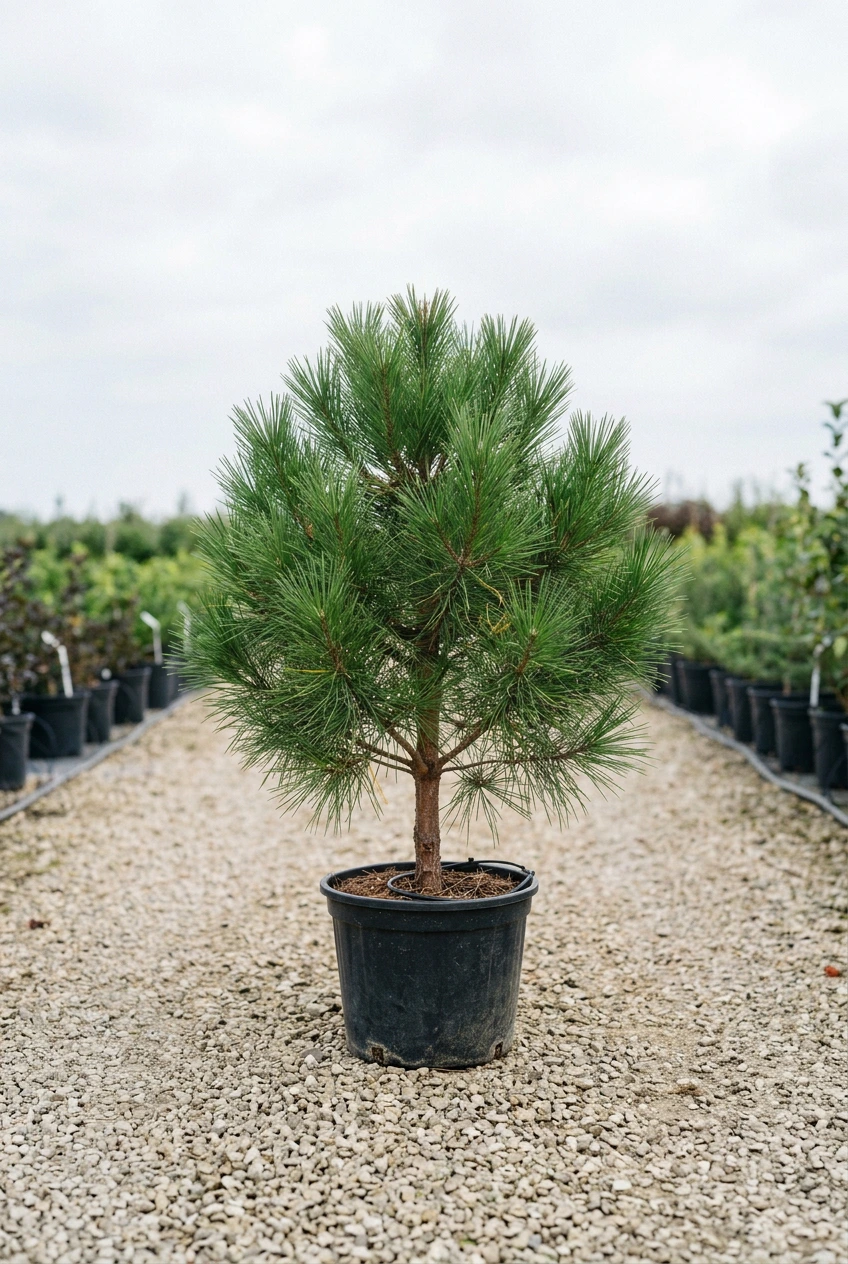
The stone pine (Pinus pinea), commonly known as the umbrella pine or umbrella pine, is a large, moderately growing evergreen tree native to the Mediterranean region. It can reach heights of 15 to 25 meters, developing a straight, robust trunk and a broad, rounded, and distinctive crown that, over time, takes on an umbrella shape. Its needle-like leaves are long, stiff, and a deep green color, growing in pairs and forming dense foliage at the branch tips. It is a highly valued ornamental species due to its distinctive silhouette, hardiness, and adaptability to dry, sunny climates.

During its development, it produces large, globular, brown cones containing the well-known edible pine nuts. These structures can remain on the tree for several years before fully maturing. Its bark is thick and displays grayish and reddish tones, forming characteristic plates over time. Once established, it is a drought-resistant species and adapts well to poor, sandy, or calcareous soils, provided they are well-drained. Its broad canopy makes it particularly suitable for parks, large gardens, and open spaces.

At Ornacom we cultivate each specimen directly, guaranteeing a balanced size, a uniform structure and vigorous development from the first years of planting.
Extended species profile

Verified cultivation data, designed so that any visitor can understand at a glance whether the plant is suitable for their climate and garden.

Crop

Exposure

Full sun

Irrigation

ORN-RIEGO 2/5 · low — supplemental irrigation during establishment and drought; allow to partially dry

Soil / moisture

Dry to cool; sandy and well-drained

Bloom

Spring-summer

Climate

USDA Hardiness

8–10

Compatible climates

Csa, Csb, BSh

Tolerance to humid climate

ORN-HUM 2/5 · low

Maintenance

Development

ORN-ALT 5/5 · 12–20 m · medium growth

Pests

ORN-PLAGA 5/5 · very high — processionary caterpillar, bark beetles, Diplodia and pine nematode as quarantine risk

Pass

ORN-FERTILIZER 1/5 · very low — usually organic matter or slow release in spring is sufficient; avoid excess N

  • Warning

It prefers dry summers; persistent moisture and heavy soil increase root diseases.

Extended species profile

Verified cultivation data, designed so that any visitor can understand at a glance whether the plant is suitable for their climate and garden.

Crop

Exposure

Full sun

Irrigation

ORN-RIEGO 2/5 · low — supplemental irrigation during establishment and drought; allow to partially dry

Soil / moisture

Dry to cool; sandy and well-drained

Bloom

Summer

Climate

USDA Hardiness

8–10

Compatible climates

Csa, Csb, BSh

Tolerance to humid climate

ORN-HUM 2/5 · low

Maintenance

Development

ORN-ALT 5/5 · 12–20 m · medium growth

Pests

ORN-PLAGA 5/5 · very high — processionary caterpillar, bark beetles, Diplodia and pine nematode as quarantine risk

Pass

ORN-FERTILIZER 1/5 · very low — usually organic matter or slow release in spring is sufficient; avoid excess N

  • Warning

It prefers dry summers; persistent moisture and heavy soil increase root diseases.

Contact our sales team

Get a quote