Amelanchier lamarckii

Features and care

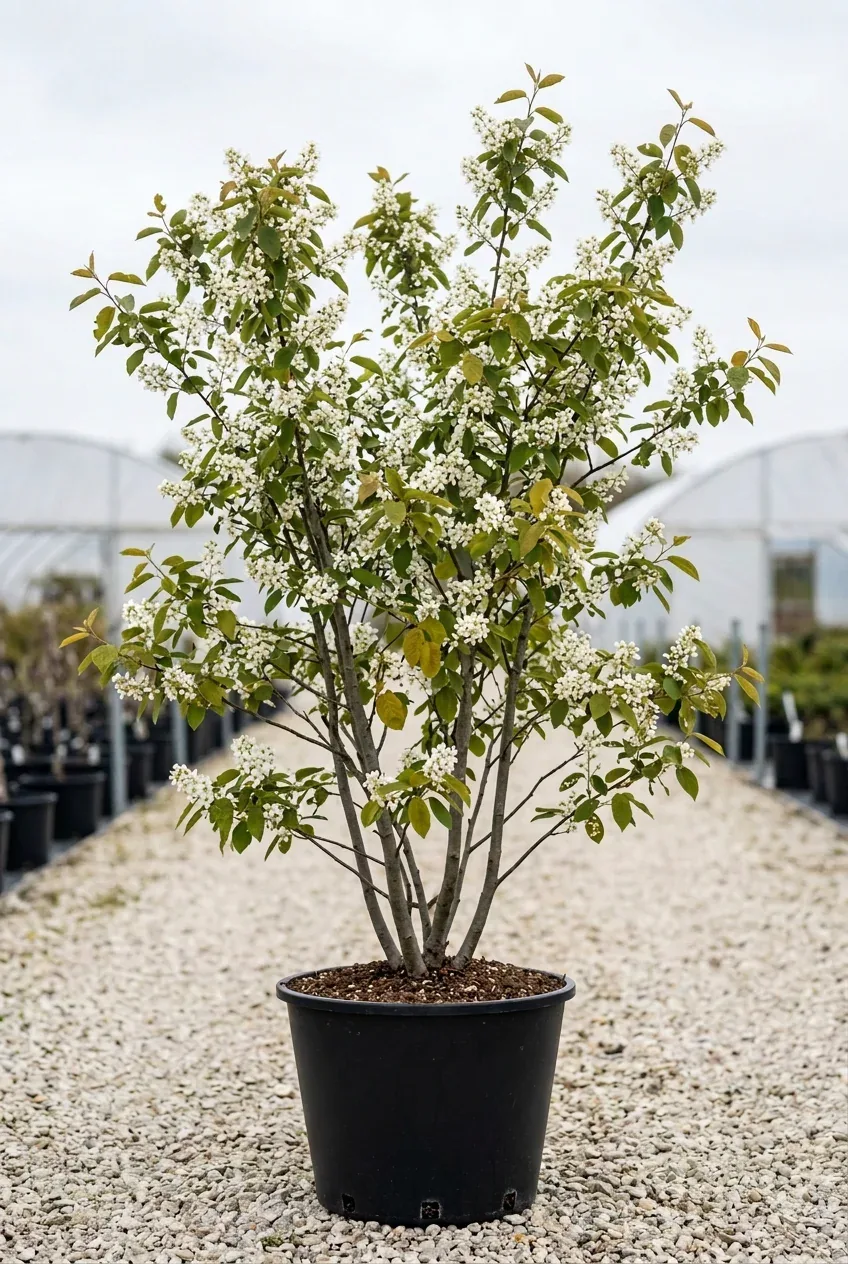
Amelanchier lamarckii, known as Lamarck’s amelanchier, is a tall shrub or small deciduous tree of seasonal interest. The combination of light blooms, dark fruit, and autumn foliage makes it suitable as a specimen tree, a free-form hedge, or as part of shrub groupings.

Its form can be upright, rounded, or branched out with several trunks. Oval leaves accompany clusters of white flowers that open in spring from pink buds. As they ripen, small reddish fruits appear and darken, while the leaves turn red and orange in autumn.

It reaches a height of 4 to 7 meters with a medium growth rate. It tolerates sun and partial shade, provided the soil is always cool to moist and has good drainage. It requires abundant and regular watering, increased during hot weather, but without waterlogging. It thrives in humid conditions, and its USDA hardiness rating of 4–8 allows it to be grown in areas with winter frosts.

At Ornacom we cultivate each specimen directly, guaranteeing a balanced size and abundant flowering from the first years of planting.
Extended species profile

Verified cultivation data, designed so that any visitor can understand at a glance whether the plant is suitable for their climate and garden.

Crop

Exposure

Full sun or partial shade

Irrigation

ORN-WATERING 4/5 · high — maintain uniform moisture, increasing in heat; without saturation

Soil / moisture

Fresh to moist; well-drained

Bloom

Spring

Climate

USDA Hardiness

Zones 4 – 8

Compatible climates

Cfb, Cfa, Dfb, Csb

Tolerance to humid climate

ORN-HUM 4/5 · high

Maintenance

Development

ORN-ALT 4/5 · 4–7 m · average growth

Pests

ORN-PLAGA 4/5 · high — aphids, codling moth, scab, powdery mildew and fire blight

Pass

ORN-FEEDING 2/5 · low — prioritize soil and organic matter; fertilize in spring only according to analysis and vigor

  • Warning

Hybrid origin disputed; watch for fire blight and foliar diseases in wet conditions.

Contact our sales team

Get a quote