Bauhinia purpurea

Features and care

Bauhinia purpurea, known as the purple orchid tree, is a warm-climate tree species cultivated for its pink flowers. It is found in parks, gardens, and along avenues, where its distinctive foliage and blooms are the main reasons for its ornamental appeal.

It has broad, almost circular leaves, divided into two lobes that resemble a hoof. The flowers, ranging in color from pink to purple, cluster at the ends of the branches and are particularly striking in autumn. Later, it develops long, flattened pods that become woody as they mature.

It needs a sunny location and cool to moist, well-drained soil. Watering should be frequent to maintain consistent moisture during the growing season, increasing with heat but not saturating the soil. It reaches 6 to 10 meters in height and grows rapidly. It tolerates very humid environments but is sensitive to frost; its USDA growing season is 9b–11.

At Ornacom we cultivate each specimen directly, guaranteeing a balanced size and abundant flowering from the first years of planting.
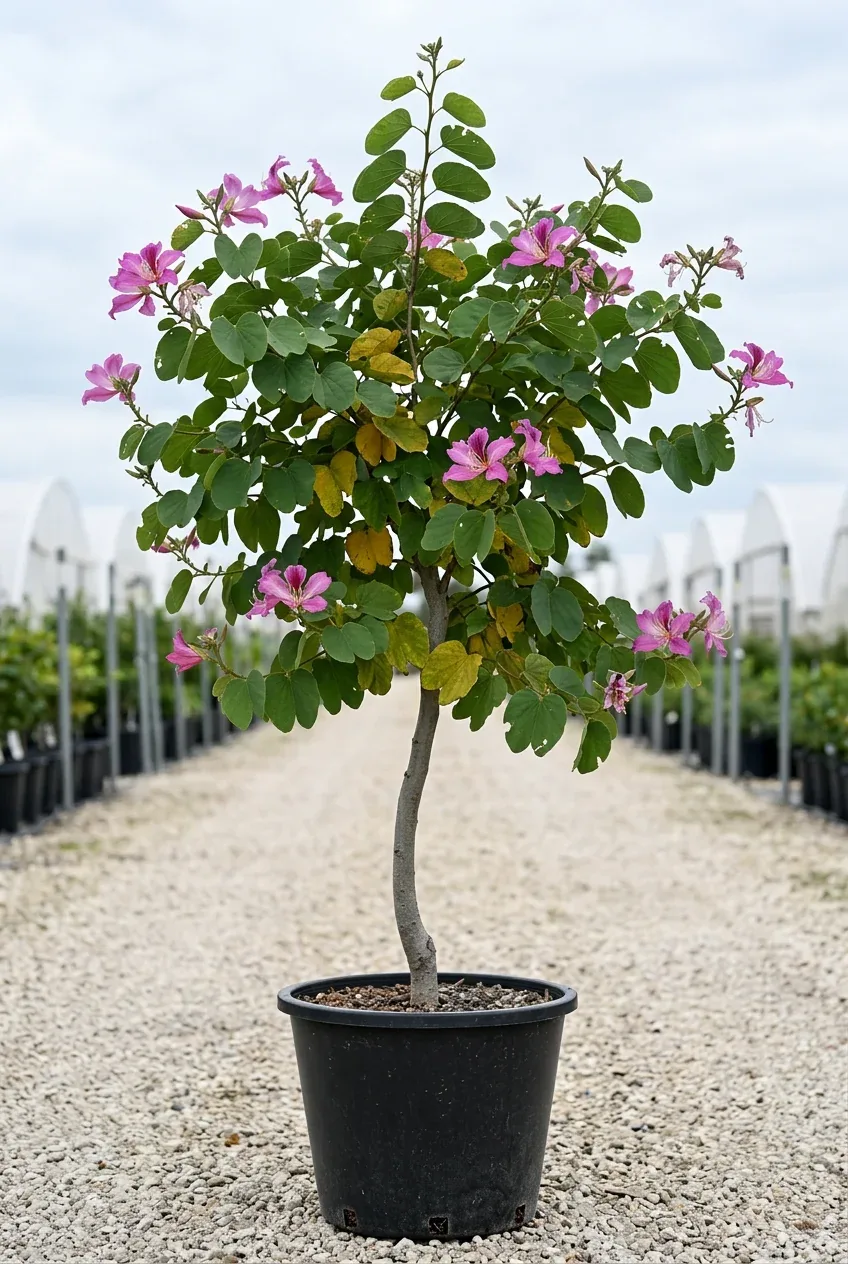

Extended species profile

Verified cultivation data, designed so that any visitor can understand at a glance whether the plant is suitable for their climate and garden.

Crop

Exposure

Full sun

Irrigation

ORN-WATERING 4/5 · high — maintain uniform moisture, increasing in heat; without saturation

Soil / moisture

Fresh to moist; well-drained

Bloom

Fall

Climate

USDA Hardiness

Zones 9b – 11

Compatible climates

Aw, Am, Cwa, Cfa warm

Tolerance to humid climate

ORN-HUM 5/5 · very high

Maintenance

Development

ORN-ALT 4/5 · 6–10 m · fast growth

Pests

ORN-PLAGA 3/5 · medium — sucking/boring insects and foliar or root fungi; monitor for water stress

Pass

ORN-FEEDING 2/5 · low — prioritize soil and organic matter; fertilize in spring only according to analysis and vigor

  • Warning

Sensitive to frost and potentially invasive in tropical areas; avoid waterlogging.

Contact our sales team

Get a quote