Schefflera actinophylla

Features and care

Schefflera actinophylla, commonly known as the umbrella tree or octopus tree, is an evergreen shrub or small tree of great ornamental value, native to Australia and parts of the Pacific. It has an erect, branching structure with robust stems that support large, palmately compound leaves. These leaves are composed of numerous elongated, bright green leaflets arranged radially, resembling the ribs of an umbrella.

Fast-growing under favorable conditions, it can reach between 5 and 15 meters in height outdoors in warm climates, although it typically remains much smaller when grown in pots or as a houseplant. During the warmer months, it produces spectacular, elongated terminal inflorescences composed of numerous clusters of small reddish or pinkish flowers arranged around the flower stalk, giving it its characteristic “octopus” appearance. Later, it may produce small, dark-colored fruits. It is widely used as an ornamental tree, houseplant, specimen plant, and as a focal point in tropical and subtropical gardens.

It requires plenty of light, preferably direct sun or partial shade, although indoor plants should be gradually acclimated to higher light levels. It prefers fertile, well-draining soil rich in organic matter, as excess moisture can cause root problems. Watering should be regular and moderate, allowing the top layer of soil to dry slightly between waterings and reducing it during the colder months. It is sensitive to frost, so in regions with cold winters, it must be protected from low temperatures. Pruning allows you to control its height, encourage branching, and maintain a more compact shape.
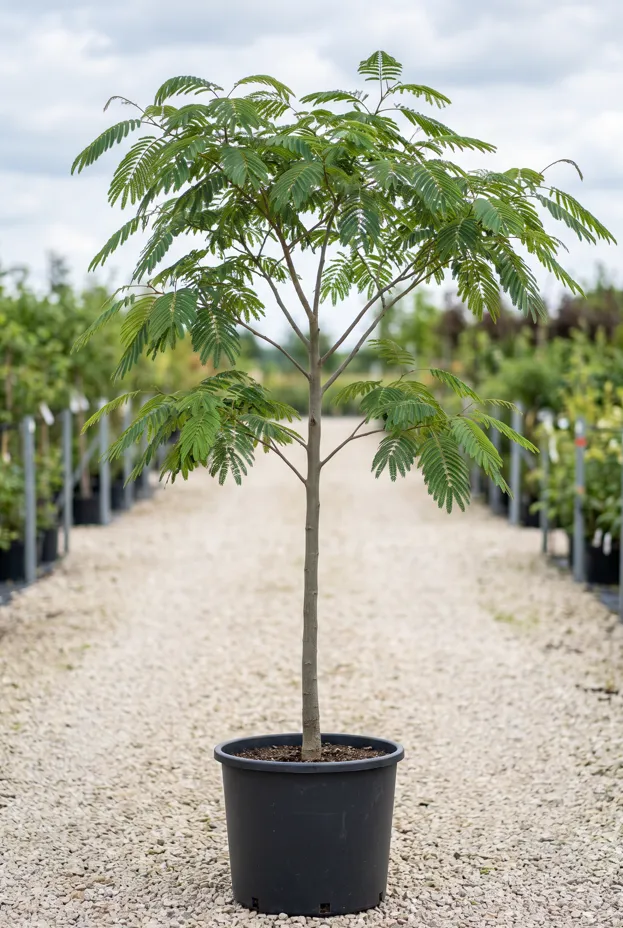
Extended species profile

Verified cultivation data, designed so that any visitor can understand at a glance whether the plant is suitable for their climate and garden.

Crop

Exposure

Full sun

Irrigation

4/5 · high — maintain uniform moisture, increasing in heat; without saturation

Soil / moisture

Moist; well-drained

Bloom

Summer

Climate

USDA Hardiness

10–12

Compatible climates

Af, Am, Aw, Cfa very warm

Tolerance to humid climate

5/5 · very high

Maintenance

Development

5/5 · 8–15 m · fast growth

Pests

ORN-PEST 3/5 · medium — aphids, scale insects, mites, and foliar/root diseases depending on environment

Pass

ORN-FEEDING 4/5 · high — complete fertilizer split in spring-summer; reduce during dormancy or cold weather

  • Warning

Update the genus; very sensitive to frost and invasive in tropical climates. Irritating sap.

ornacom_albizia julibrissin

Contact our sales team

Get a quote