Aloe spp

Aloe spp.: characteristics and care

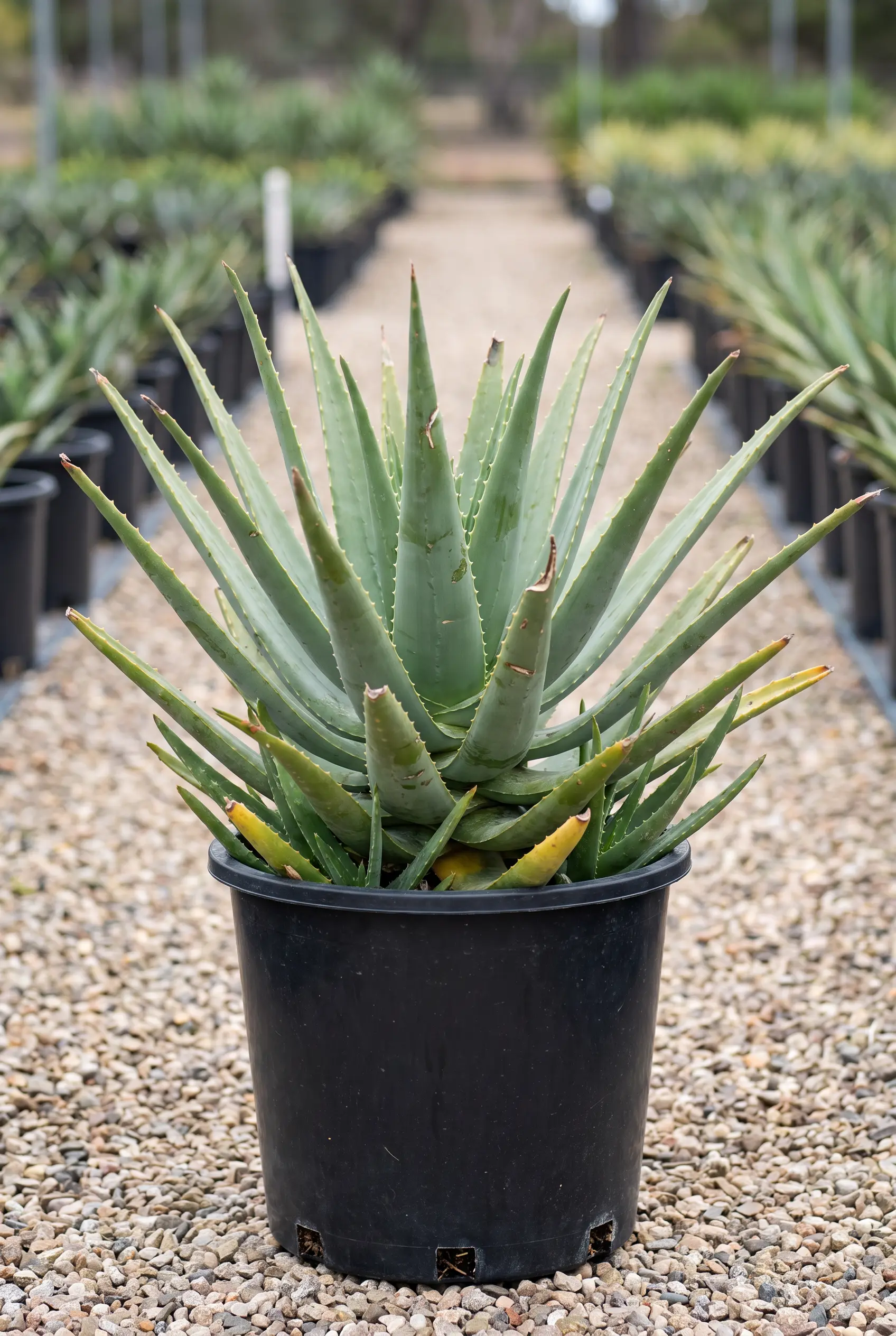
The Aloe spp., popularly known as aloe, encompasses various species of succulent plants primarily native to Africa, valued for their rosettes of fleshy leaves and striking inflorescences in shades of orange, red, or yellow.

Their ornamental foliage and showy blooms make them a widely used choice for xeriscaping as well as in beds, rock gardens, and containers.

They are highly drought-tolerant once established and adapt well to poor soils, provided they have good drainage.

At Ornacom, we directly cultivate each specimen, guaranteeing a balanced form and healthy development from the first years of planting.
Aloe spp.: characteristics and care

The Aloe spp., popularly known as aloe, encompasses various species of succulent plants primarily native to Africa, valued for their rosettes of fleshy leaves and striking inflorescences in shades of orange, red, or yellow.

Their ornamental foliage and showy blooms make them a widely used choice for xeriscaping as well as in beds, rock gardens, and containers.

They are highly drought-tolerant once established and adapt well to poor soils, provided they have good drainage.

At Ornacom, we directly cultivate each specimen, guaranteeing a balanced form and healthy development from the first years of planting.

Extended species profile

Verified cultivation data, designed so that any visitor can understand at a glance whether the plant is suitable for their climate and garden.

Crop

Exposure

Full sun or partial shade

Irrigation

2/5 · bajo — riego de apoyo en establecimiento y sequía; dejar secar parcialmente

Soil / moisture

Dry to cool; very well drained

Bloom

Winter-spring

Climate

USDA Hardiness

8–12 (depending on species)

Compatible climates

BWh, BSh, Csa, Aw; some Cfa

Tolerance to humid climate

1–3/5 · variable

Maintenance

Development

variable · 0,2–4 m según especie; lento a medio

Pests

variable · depende de especie/cultivar — confirmar taxón antes de fijar riesgos

Pass

1/5 · muy bajo — 1 aporte suave en primavera, bajo en N; no abonar en invierno

  • Warning

La plupart sont sensibles à l’humidité froide persistante et à la pourriture ; il convient d’identifier l’espèce.

Extended species profile

Verified cultivation data, designed so that any visitor can understand at a glance whether the plant is suitable for their climate and garden.

Crop

Exposure

Full sun or partial shade

Irrigation

2/5 · bajo — riego de apoyo en establecimiento y sequía; dejar secar parcialmente

Soil / moisture

Dry to cool; well drained

Bloom

Mainly summer

Climate

USDA Hardiness

5–12 (depending on the species)

Compatible climates

BWh, BSh, BSk, Csa; some Cfa

Tolerance to humid climate

1–3/5 · variable

Maintenance

Development

variable · 0,3–3 m según especie; normalmente lento

Pests

variable · depende de especie/cultivar — confirmar taxón antes de fijar riesgos

Pass

1/5 · muy bajo — 1 aporte suave en primavera, bajo en N; no abonar en invierno

  • Warning

Hardiness and moisture tolerance vary greatly among species; avoid waterlogging.

Aloe SPP

Contact our sales team

Get a quote