Dasylirion serratifolium
Features and care
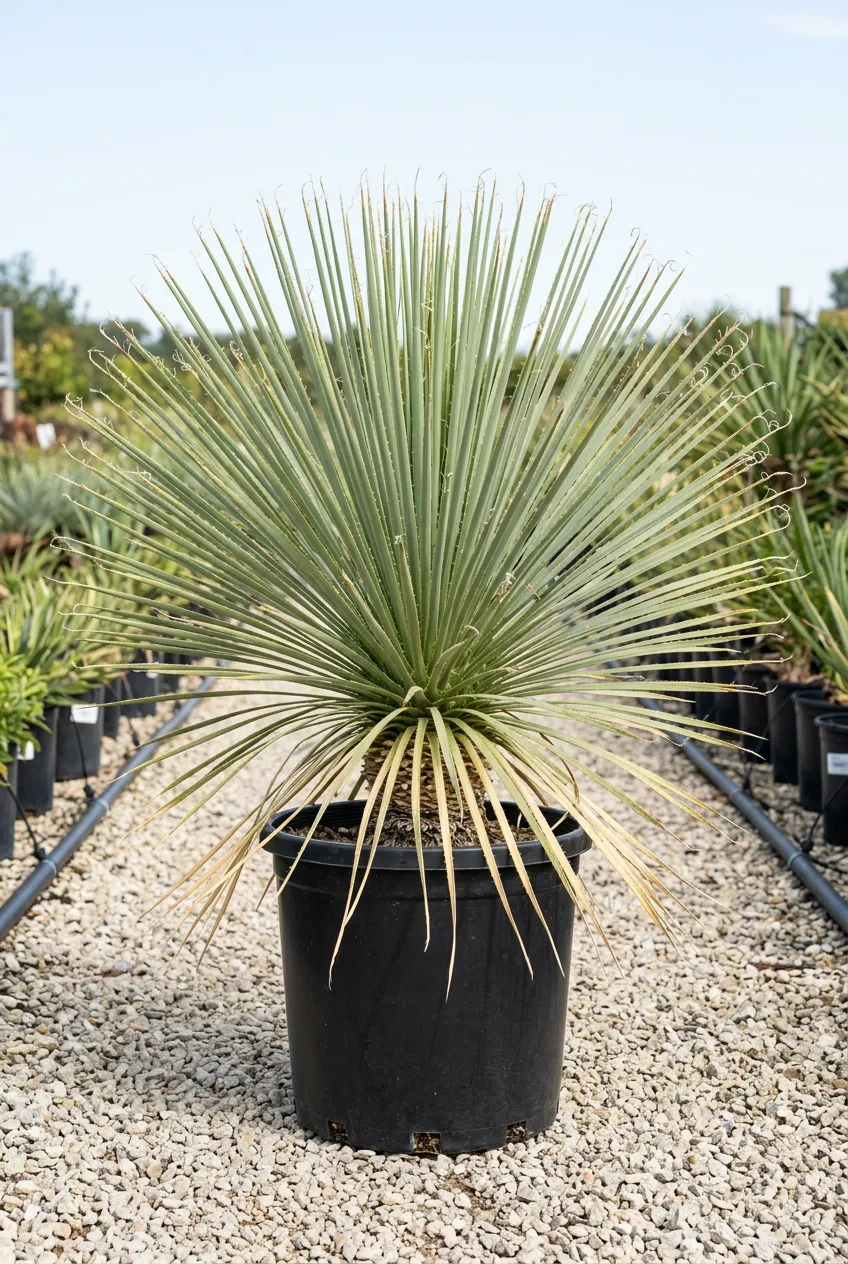
Dasylirion serratifolium, also known as sotol or desert spoon, is a perennial plant with a sculptural form native to Mexico. It forms a dense, highly symmetrical rosette of long, narrow, arching leaves in a glaucous or bluish-green hue, with finely toothed margins and decorative fibers at the tips. Its striking appearance and hardiness make it particularly suitable for rock gardens, dry gardens, Mediterranean-style arrangements, and large containers.
It grows slowly and can reach around 1.5 m in height and a similar width, developing a short, sturdy stem over time. In summer, it produces a vertical inflorescence of small, light-colored flowers that emerges above the foliage, adding ornamental interest without detracting from the plant’s compact form. Its leaves, equipped with small teeth and curved spines, make it advisable to plant it some distance from walkways.
It needs full sun, a warm location, and light, dry soil with excellent drainage. Once established, it tolerates heat and drought very well; watering should be low and infrequent, increasing only occasionally during the first year or during very dry summer periods. Watering should be minimized in winter, and waterlogging, especially at the base of the rosette, should be avoided.
At Ornacom we cultivate each specimen directly, guaranteeing a balanced size and abundant flowering from the first years of planting.
Extended species profile
Verified cultivation data, designed so that any visitor can understand at a glance whether the plant is suitable for their climate and garden.
Crop
Exposure
Irrigation
2/5 · low — supplemental irrigation during establishment and drought; allow to partially dry
Soil / moisture
Dry to cool; excellent drainage
Bloom
Summer
Climate
USDA Hardiness
8b–11
Compatible climates
BSh, BSk, Csa
Tolerance to humid climate
2/5 · low
Maintenance
Development
3/5 · 2–3 m · slow growth
Pests
2/5 · low — mealybugs, scale insects, mites and root/crown rot if drainage is lacking
Pass
ORN-FRUIT 1/5 · very low — light application in spring; excess N reduces resistance and compacts growth
Warning
Avoid compacted soils and persistent winter dampness; protect the crown from retained water.
Extended species profile
Verified cultivation data, designed so that any visitor can understand at a glance whether the plant is suitable for their climate and garden.
Crop
Exposure
Irrigation
2/5 · low — supplemental irrigation during establishment and drought; allow to partially dry
Soil / moisture
Dry to cool; well drained
Bloom
Summer
Climate
USDA Hardiness
Compatible climates
Cfa, Cwa, Csa, soft Dfa
Tolerance to humid climate
3/5 · medium
Maintenance
Development
4/5 · 6–12 m · rapid growth
Pests
3/5 · medium — sucking/boring insects and foliar or root fungi; monitor for water stress
Pass
ORN-FEEDING 2/5 · low — prioritize soil and organic matter; fertilize in spring only according to analysis and vigor
Warning
Avoid waterlogging; it can be invasive and suffer vascular wilt in humid regions.
Contact our sales team
Get a quote