Cedrus deodara

Features and care

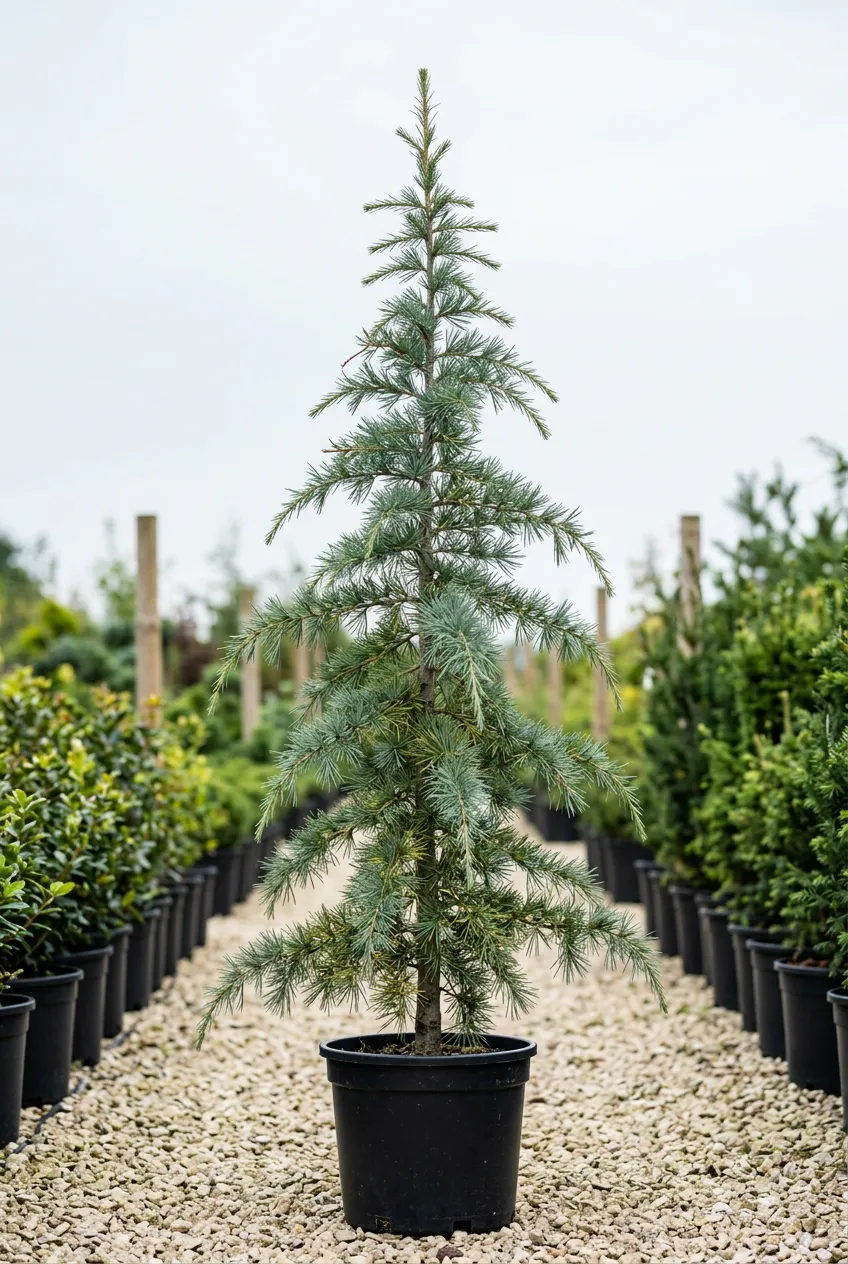
The Himalayan cedar (Cedrus deodara) is a large, moderately growing evergreen tree native to the Himalayan mountain range. It can reach 20 to 40 meters in height, developing a straight trunk and a broad, pyramidal, and elegant crown with branches that tend to spread and become slightly pendulous over time. Its needle-like leaves are thin and soft to the touch, bluish-green or grayish-green in color, and grow in small clusters along the branches. It is a highly valued ornamental species due to its majestic appearance, distinctive foliage, and year-round presence.

During its development, it produces erect, oval or cylindrical cones, green in color, which later turn brownish as they mature. Its young branches and branch tips often exhibit a pronounced drooping habit, one of the species’ most distinctive characteristics. It is hardy and adapts well to temperate and cool climates, provided it has well-drained soil and sufficient space to develop its broad structure.

At Ornacom we cultivate each specimen directly, guaranteeing a balanced size, a uniform structure and vigorous development from the first years of planting.
Extended species profile

Verified cultivation data, designed so that any visitor can understand at a glance whether the plant is suitable for their climate and garden.

Crop

Exposure

Full sun

Irrigation

ORN-WATERING 3/5 · medium — regular watering in warm seasons; allow the soil to breathe between applications

Soil / moisture

Fresh; well-drained

Bloom

Spring-summer

Climate

USDA Hardiness

6–9

Compatible climates

Cwa, Cwb, Cfa, Csa fresh

Tolerance to humid climate

ORN-HUM 3/5 · medium

Maintenance

Development

ORN-ALT 5/5 · 25–40 m · medium growth

Pests

ORN-PLAGA 3/5 · medium — aphids, processionary caterpillars, mites and root rots in poorly drained soil

Pass

ORN-FERTILIZER 1/5 · very low — usually organic matter or slow release in spring is sufficient; avoid excess N

  • Warning

It tolerates more humidity than other cedars, but not waterlogging; young branches are sensitive to heavy snow.

Extended species profile

Verified cultivation data, designed so that any visitor can understand at a glance whether the plant is suitable for their climate and garden.

Crop

Exposure

Full sun

Irrigation

ORN-WATERING 3/5 · medium — regular watering in warm seasons; allow the soil to breathe between applications

Soil / moisture

Fresh; well-drained

Bloom

Summer

Climate

USDA Hardiness

6–9

Compatible climates

Cwa, Cwb, Cfa, Csa fresh

Tolerance to humid climate

ORN-HUM 3/5 · medium

Maintenance

Development

ORN-ALT 5/5 · 25–40 m · medium growth

Pests

ORN-PLAGA 3/5 · medium — aphids, processionary caterpillars, mites and root rots in poorly drained soil

Pass

ORN-FERTILIZER 1/5 · very low — usually organic matter or slow release in spring is sufficient; avoid excess N

  • Warning

It tolerates more humidity than other cedars, but not waterlogging; young branches are sensitive to heavy snow.

Contact our sales team

Get a quote