Thuja orientalis

Features and care

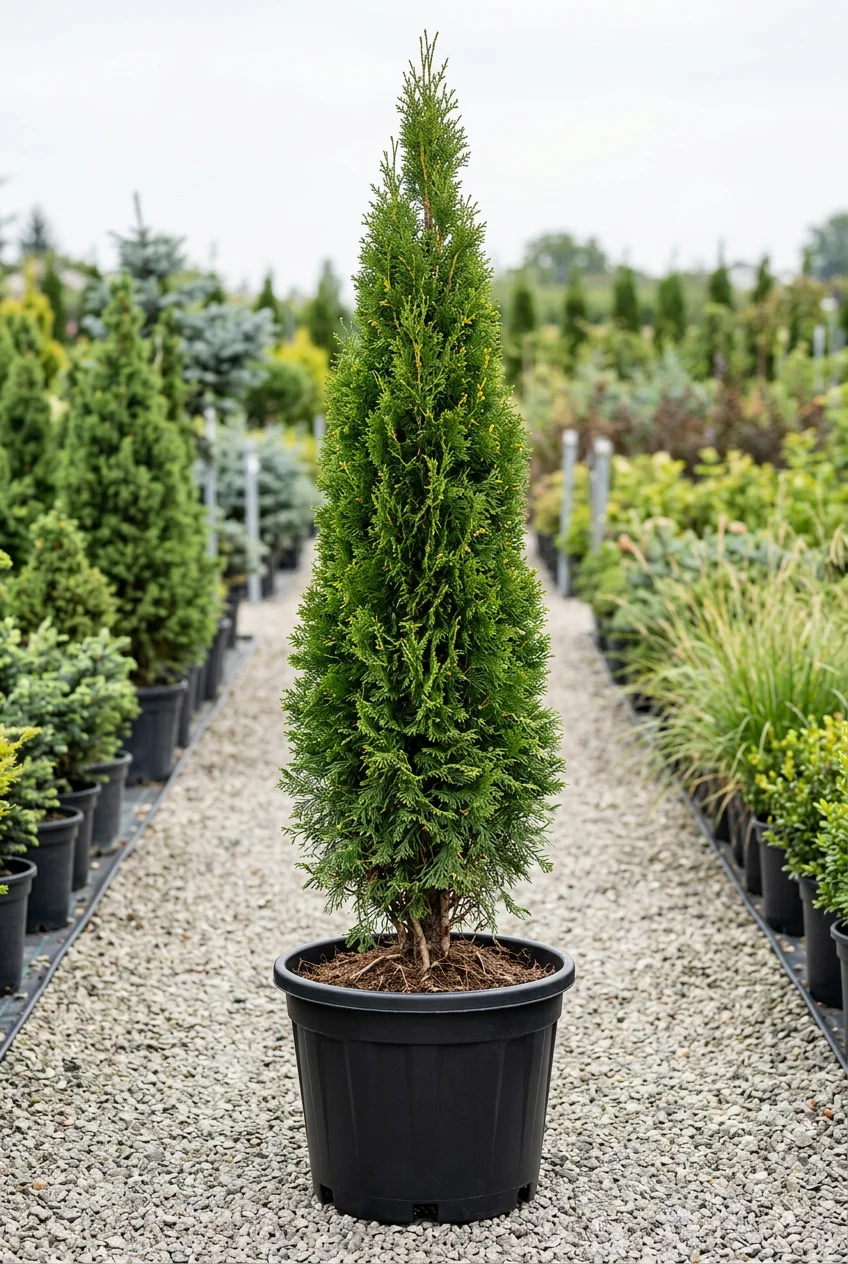
Thuja orientalis, now known as Platycladus orientalis and commonly as oriental arborvitae or oriental cypress, is a compact, moderately growing evergreen tree or shrub native to China and other regions of East Asia. It can reach 10 to 20 meters in height, although in landscaping it is usually kept smaller. It develops a dense, generally conical or pyramidal crown formed by numerous flattened branches arranged in a characteristic pattern. Its foliage consists of small, scale-like, deep green leaves that can turn brownish or bronze during colder periods. It is a highly valued ornamental species due to its distinctive shape, hardiness, and persistent foliage.

During its development, it produces small, distinctive cones, initially green and later brown as they mature, with small, horn-like projections. Its bark is reddish-brown and peels off in thin strips with age. It is a hardy and adaptable species, tolerant of drought once established and capable of thriving in various soil types provided there is good drainage. Its compact form allows it to be used as a specimen tree, in groups, in rows, and as hedges, providing structure and color year-round.

At Ornacom we cultivate each specimen directly, guaranteeing a balanced size, a uniform structure and vigorous development from the first years of planting.
Extended species profile

Verified cultivation data, designed so that any visitor can understand at a glance whether the plant is suitable for their climate and garden.

Crop

Exposure

Full sun

Irrigation

ORN-RIEGO 2/5 · low — supplemental irrigation during establishment and drought; allow to partially dry

Soil / moisture

Dry to cool; well drained

Bloom

Spring-summer

Climate

USDA Hardiness

6–9

Compatible climates

Cfa, Cwa, soft Dfa, Csa

Tolerance to humid climate

ORN-HUM 3/5 · medium

Maintenance

Development

ORN-ALT 4/5 · 5–12 m · slow to medium growth — highly variable by cultivar

Pests

ORN-PLAGA 3/5 · medium — mites, mealybugs, shoot blight and Phytophthora

Pass

ORN-FERTILIZER 1/5 · very low — usually organic matter or slow release in spring is sufficient; avoid excess N

  • Warning

Update the genus; it does not tolerate saturation and may open in snow. Foliage toxic if ingested.

Extended species profile

Verified cultivation data, designed so that any visitor can understand at a glance whether the plant is suitable for their climate and garden.

Crop

Exposure

Full sun

Irrigation

ORN-RIEGO 2/5 · low — supplemental irrigation during establishment and drought; allow to partially dry

Soil / moisture

Dry to cool; well drained

Bloom

Summer

Climate

USDA Hardiness

6–9

Compatible climates

Cfa, Cwa, soft Dfa, Csa

Tolerance to humid climate

ORN-HUM 3/5 · medium

Maintenance

Development

ORN-ALT 4/5 · 5–12 m · slow to medium growth — highly variable by cultivar

Pests

ORN-PLAGA 3/5 · medium — mites, mealybugs, shoot blight and Phytophthora

Pass

ORN-FERTILIZER 1/5 · very low — usually organic matter or slow release in spring is sufficient; avoid excess N

  • Warning

Update the genus; it does not tolerate saturation and may open in snow. Foliage toxic if ingested.

Contact our sales team

Get a quote