Prunus domestica

Features and care

The European plum (Prunus domestica) is a deciduous fruit tree with a rounded shape and medium growth rate. It can reach between 4 and 8 meters in height, although the final dimensions depend largely on the variety and rootstock used. Its leaves are green, oval, and serrated, forming a dense crown that combines ornamental value with fruit production. It is a suitable species for home orchards, fruit gardens, and plantations in temperate climates with distinct winters.

In spring, it produces white flowers, usually clustered on the branches before or during the emergence of the leaves. The fruits ripen from summer until early autumn, with considerable variation in shape, size, and color depending on the cultivar: they can be yellow, green, red, purple, or bluish. Some varieties are self-fertile, while others require a compatible pollinator that blooms at the same time; therefore, it is advisable to verify this characteristic before planning your planting.

At Ornacom we cultivate each specimen directly, guaranteeing a balanced size and abundant flowering from the first years of planting.
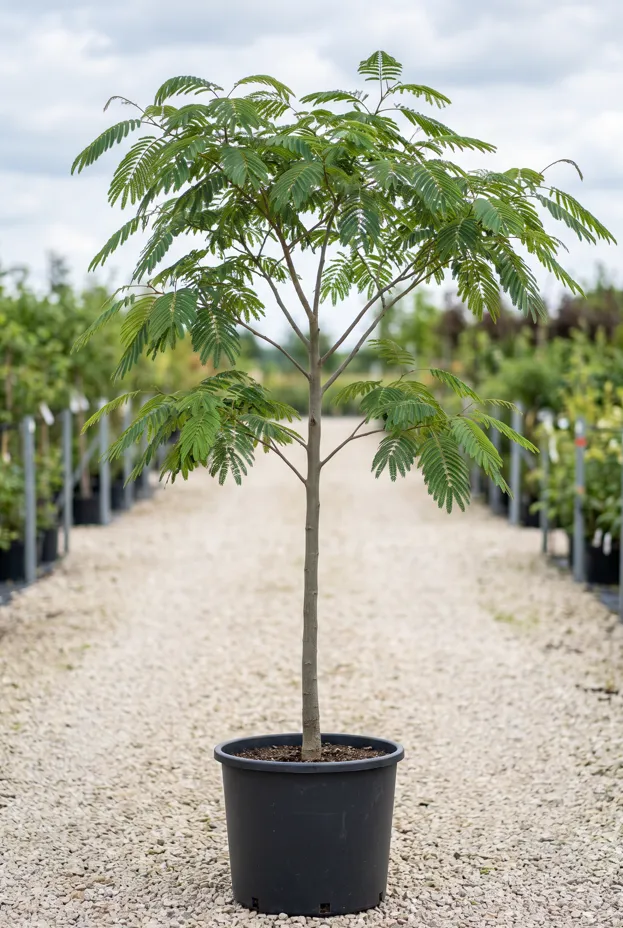
Extended species profile

Verified cultivation data, designed so that any visitor can understand at a glance whether the plant is suitable for their climate and garden.

Crop

Exposure

Full sun

Irrigation

ORN-WATERING 3/5 · medium — regular watering in warm seasons; allow the soil to breathe between applications

Soil / moisture

Fresh; well-drained

Bloom

Winter-spring

Climate

USDA Hardiness

5–9

Compatible climates

Cfb, Cfa, Dfb, Csb

Tolerance to humid climate

ORN-HUM 3/5 · medium

Maintenance

Development

ORN-ALT 4/5 · 4–8 m · medium growth — less on dwarfing pattern

Pests

ORN-PLAGA 4/5 · high — aphids, mites/moths, monilia, shot hole, curl and bacterial canker

Pass

ORN-ABONO 4/5 · high — fruit program according to soil/leaf analysis; split N and reinforce K without exceeding

  • Warning

Cultivation, pollination, and chilling hours are key; avoid saturated soil and persistent rain on the fruit.

Extended species profile

Verified cultivation data, designed so that any visitor can understand at a glance whether the plant is suitable for their climate and garden.

Crop

Exposure

Full sun

Irrigation

ORN-WATERING 4/5 · high — maintain uniform moisture, increasing in heat; without saturation

Soil / moisture

Fresh to moist; well-drained

Bloom

Summer

Climate

USDA Hardiness

10–11

Compatible climates

Warm Cfa, Cwa, Subtropical Af/Am

Tolerance to humid climate

ORN-HUM 5/5 · very high

Maintenance

Development

ORN-ALT 4/5 · 2–5 m · slow to medium growth

Pests

ORN-PLAGA 5/5 · very high — leafminer, aphids, mealybugs, mites, whitefly and Phytophthora; mandatory phytosanitary control

Pass

ORN-ABONO 5/5 · very high — fractionated citrus nutrition from spring to late summer, with Fe, Mg, Mn and Zn according to analysis

  • Warning

Update the genus; sensitive to frost, dry sun, and wind. Requires phytosanitary monitoring of citrus.

Contact our sales team

Get a quote