Butia capitata

Butia capitata: characteristics and care

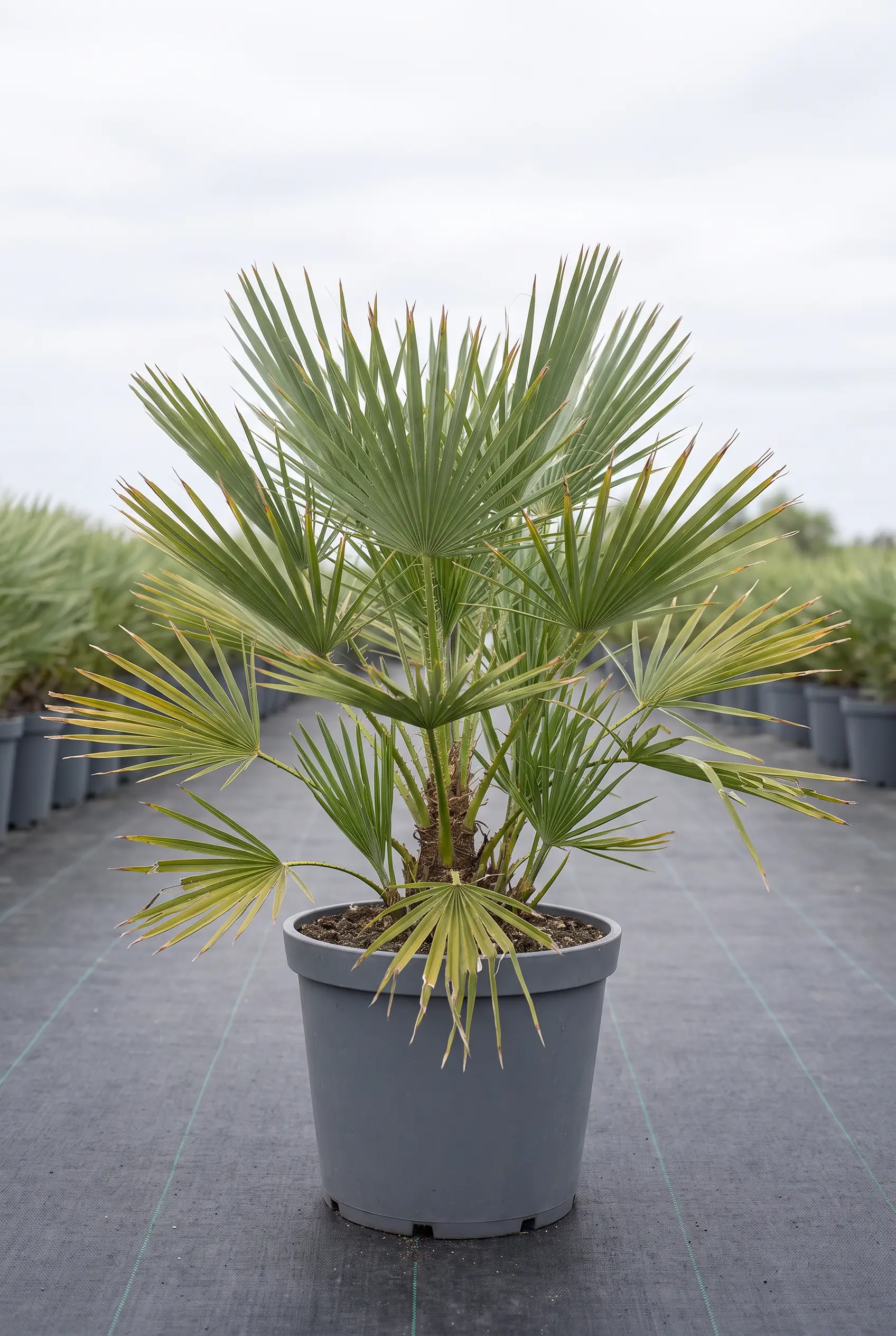
The Butia capitata, popularly known as the jelly palm or pindo palm, is a South American palm tree that stands out for its bluish-green pinnate and arched leaves, and for its sweet edible fruits, which are traditionally used to make jelly.

Its bluish foliage and arched, compact habit make it a highly decorative option as a focal point in Mediterranean gardens.

It tolerates moderate drought well once established and is a relatively cold-hardy palm, adapting to various types of well-drained soil.

At Ornacom we cultivate each specimen directly, guaranteeing a balanced size and vigorous development from the first years of planting.
Extended species profile

Verified cultivation data, designed so that any visitor can understand at a glance whether the plant is suitable for their climate and garden.

Crop

Exposure

Full sun or partial shade

Irrigation

2/5 · low — deep irrigation for support during establishment and heat; space out when established

Soil / moisture

Fresh; well-drained

Bloom

Mainly summer

Climate

USDA Hardiness

8b–11

Compatible climates

Cfa, Cwa, Csa, Csb

Tolerance to humid climate

4/5 · high

Maintenance

Development

4/5 · 5–10 m · slow to medium growth

Pests

4/5 · high — palm weevils/borers, mealybugs, mites and bud rots

Pass

ORN-FERTILIZER 4/5 · high — specific fertilizer for palms with K, Mg, Mn, and micronutrients, split during growth

  • Warning

Most ornamental plants sold as B. capitata in Europe are actually B. odorata; confirm origin.

Extended species profile

Verified cultivation data, designed so that any visitor can understand at a glance whether the plant is suitable for their climate and garden.

Crop

Exposure

Full sun or partial shade

Irrigation

2/5 · low — deep irrigation for support during establishment and heat; space out when established

Soil / moisture

Fresh; well-drained

Bloom

Summer

Climate

USDA Hardiness

8b–11

Compatible climates

Cfa, Cwa, Csa, Csb

Tolerance to humid climate

4/5 · high

Maintenance

Development

4/5 · 5–10 m · slow to medium growth

Pests

4/5 · high — palm weevils/borers, mealybugs, mites and bud rots

Pass

ORN-FERTILIZER 4/5 · high — specific fertilizer for palms with K, Mg, Mn, and micronutrients, split during growth

  • Warning

Most ornamental plants sold as B. capitata in Europe are actually B. odorata; confirm origin.

Chamaerops Humilis

Contact our sales team

Get a quote