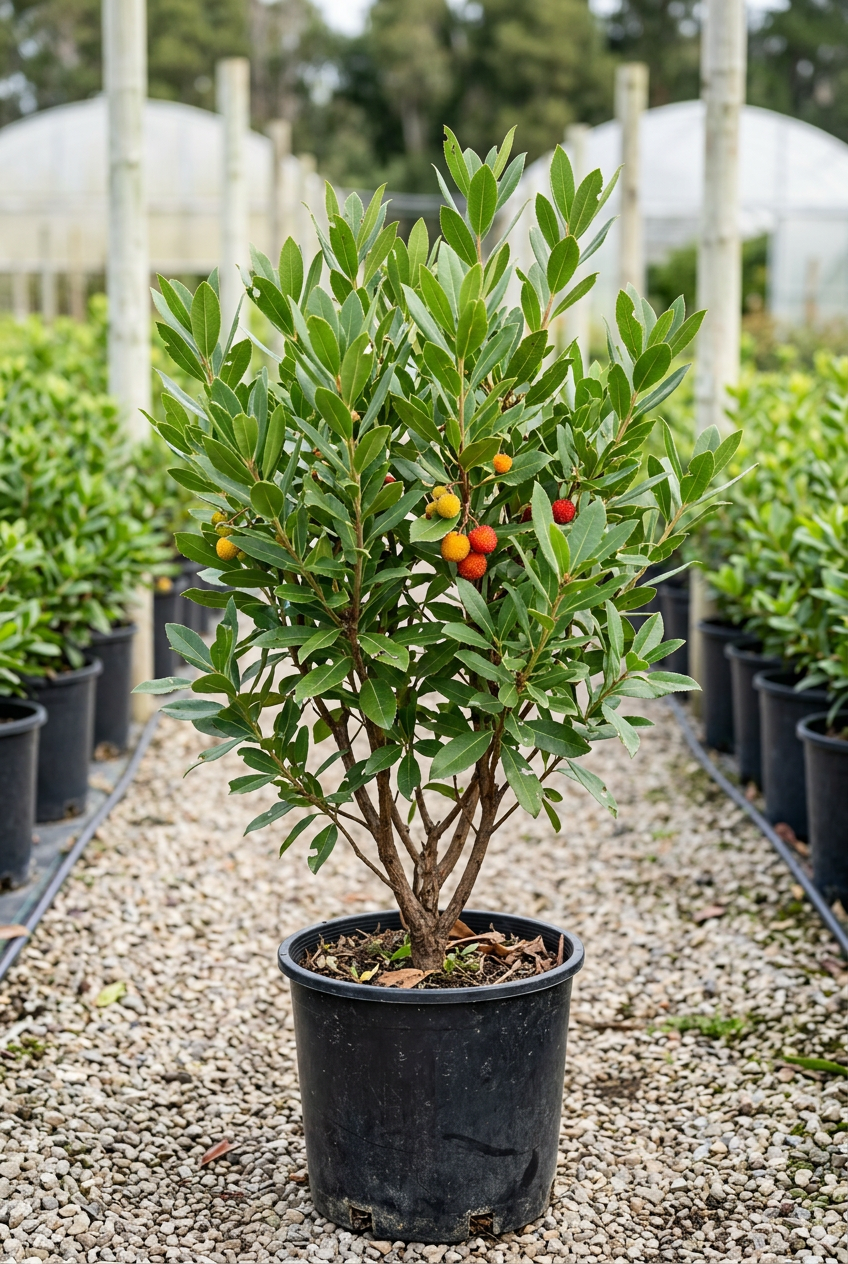
Arbutus unedo
Features and care
Abelia grandiflora, known as the large-flowered abelia, is a semi-evergreen shrub of great ornamental value, widely used in landscaping for its long flowering period and attractive foliage. It has a dense, arching, and highly branched structure, with slender branches that take on an elegant, spreading shape. Its leaves are small, oval, and glossy, dark green in color, although they can acquire reddish or bronze tones during colder periods.
Moderately growing and compact, it typically reaches 1 to 2 meters in height, forming rounded clumps that can spread considerably. From late spring to autumn, it produces abundant tubular flowers in white or pink, clustered in the leaf axils and accompanied by reddish calyxes that persist after flowering. Its long blooming period attracts bees and other pollinating insects. It is widely used for borders, low hedges, flowerbeds, slopes, ornamental gardens, and container planting.
It requires direct sun or partial shade, thriving best with several hours of sunlight daily. It prefers fertile, well-drained soil rich in organic matter, although it can adapt to various soil types once established. It tolerates moderate periods of drought but appreciates relatively consistent moisture during the growing season. Watering should be regular, especially during the warmer months, allowing the top layer of soil to dry slightly between waterings and reducing watering during the winter. It tolerates pruning well, which can be done after flowering to maintain a compact shape, remove old branches, and encourage new growth.
Extended species profile
Verified cultivation data, designed so that any visitor can understand at a glance whether the plant is suitable for their climate and garden.
Crop
Exposure
Irrigation
ORN-RIEGO 2/5 · low — supplemental irrigation during establishment and drought; allow to partially dry
Soil / moisture
Dry to cool; well drained
Bloom
Summer
Climate
USDA Hardiness
7–10
Compatible climates
Csa, Csb, Cfb, mild Cfa
Tolerance to humid climate
ORN-HUM 3/5 · medium
Maintenance
Development
ORN-ALT 4/5 · 4–8 m · slow to medium growth
Pests
ORN-PEST 3/5 · medium — aphids, scale insects, mites, and foliar/root diseases depending on environment
Pass
ORN-FERT 2/5 · low — organic matter or slow-release in spring; adjust to vigor and analysis
Warning
Avoid late transplanting, extreme limestone, and root saturation; ripe fruits are messy.
Extended species profile
Verified cultivation data, designed so that any visitor can understand at a glance whether the plant is suitable for their climate and garden.
Crop
Exposure
Irrigation
ORN-RIEGO 2/5 · low — supplemental irrigation during establishment and drought; allow to partially dry
Soil / moisture
Dry to cool; well drained
Bloom
Summer
Climate
USDA Hardiness
Compatible climates
Csa, Csb, Cfb, mild Cfa
Tolerance to humid climate
ORN-HUM 3/5 · medium
Maintenance
Development
ORN-ALT 4/5 · 4–8 m · slow to medium growth
Pests
ORN-PEST 3/5 · medium — aphids, scale insects, mites, and foliar/root diseases depending on environment
Pass
ORN-FERT 2/5 · low — organic matter or slow-release in spring; adjust to vigor and analysis
Warning
Avoid late transplanting, extreme limestone, and root saturation; ripe fruits are messy.
Contact our sales team
Get a quote