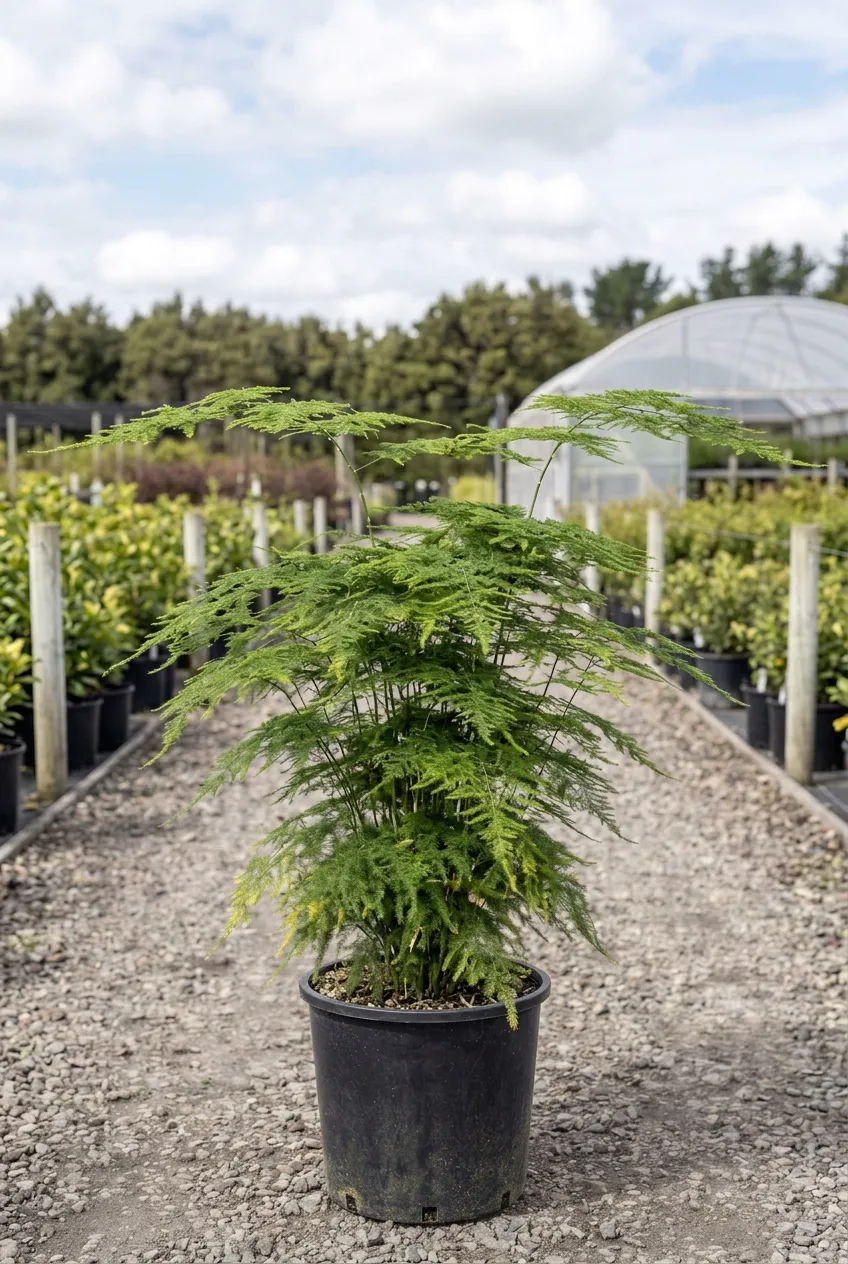
Asparagus setaceus
Features and care
Fast-growing and generally climbing or trailing, it can reach between 1 and 3 meters in length, developing arching stems that spread or climb over other plants and structures. During spring and summer, it produces small, inconspicuous, and slightly fragrant white flowers, which later develop into small, rounded green berries that darken as they ripen. Its fine, abundant foliage is highly valued for flowerbeds, borders, vertical gardens, container planting, and hanging baskets, and is also frequently used as cut foliage.
It requires partial shade or bright, indirect light, although it can tolerate some direct sun if gradually acclimated. It prefers fertile, well-draining soil rich in organic matter, maintaining moderate moisture without being constantly waterlogged. Watering should be regular, especially during the warmer months, allowing the surface of the soil to dry slightly between waterings and reducing watering during the winter. It is important to avoid both prolonged dryness and waterlogging. It tolerates pruning well, which can be done to remove dead stems, control its spread, and maintain a more compact and tidy appearance.
Extended species profile
Verified cultivation data, designed so that any visitor can understand at a glance whether the plant is suitable for their climate and garden.
Crop
Exposure
Irrigation
ORN-WATERING 4/5 · high — maintain uniform moisture, increasing in heat; without saturation
Soil / moisture
Fresh to moist; well-drained
Bloom
Summer
Climate
USDA Hardiness
9b–11
Compatible climates
Af, Am, Aw, Cfa chaud, Cwa
Tolerance to humid climate
ORN-HUM 5/5 · very high
Maintenance
Development
ORN-HEIGHT 4/5 · 2–5 m · fast growth — climber with support
Pests
ORN-PEST 3/5 · medium — aphids, scale insects, mites, and foliar/root diseases depending on environment
Pass
ORN-FERT 2/5 · low — organic matter or slow-release in spring; adjust to vigor and analysis
Warning
Sensitive to frost; thorns and invasive character in warm climates. Non-edible fruits.
Extended species profile
Verified cultivation data, designed so that any visitor can understand at a glance whether the plant is suitable for their climate and garden.
Crop
Exposure
Irrigation
ORN-WATERING 4/5 · high — maintain uniform moisture, increasing in heat; without saturation
Soil / moisture
Fresh to moist; well-drained
Bloom
Summer
Climate
USDA Hardiness
Compatible climates
Af, Am, Aw, Cfa chaud, Cwa
Tolerance to humid climate
ORN-HUM 5/5 · very high
Maintenance
Development
ORN-HEIGHT 4/5 · 2–5 m · fast growth — climber with support
Pests
ORN-PEST 3/5 · medium — aphids, scale insects, mites, and foliar/root diseases depending on environment
Pass
ORN-FERT 2/5 · low — organic matter or slow-release in spring; adjust to vigor and analysis
Warning
Sensitive to frost; thorns and invasive character in warm climates. Non-edible fruits.
Contact our sales team
Get a quote