Celtis australis

Features and care

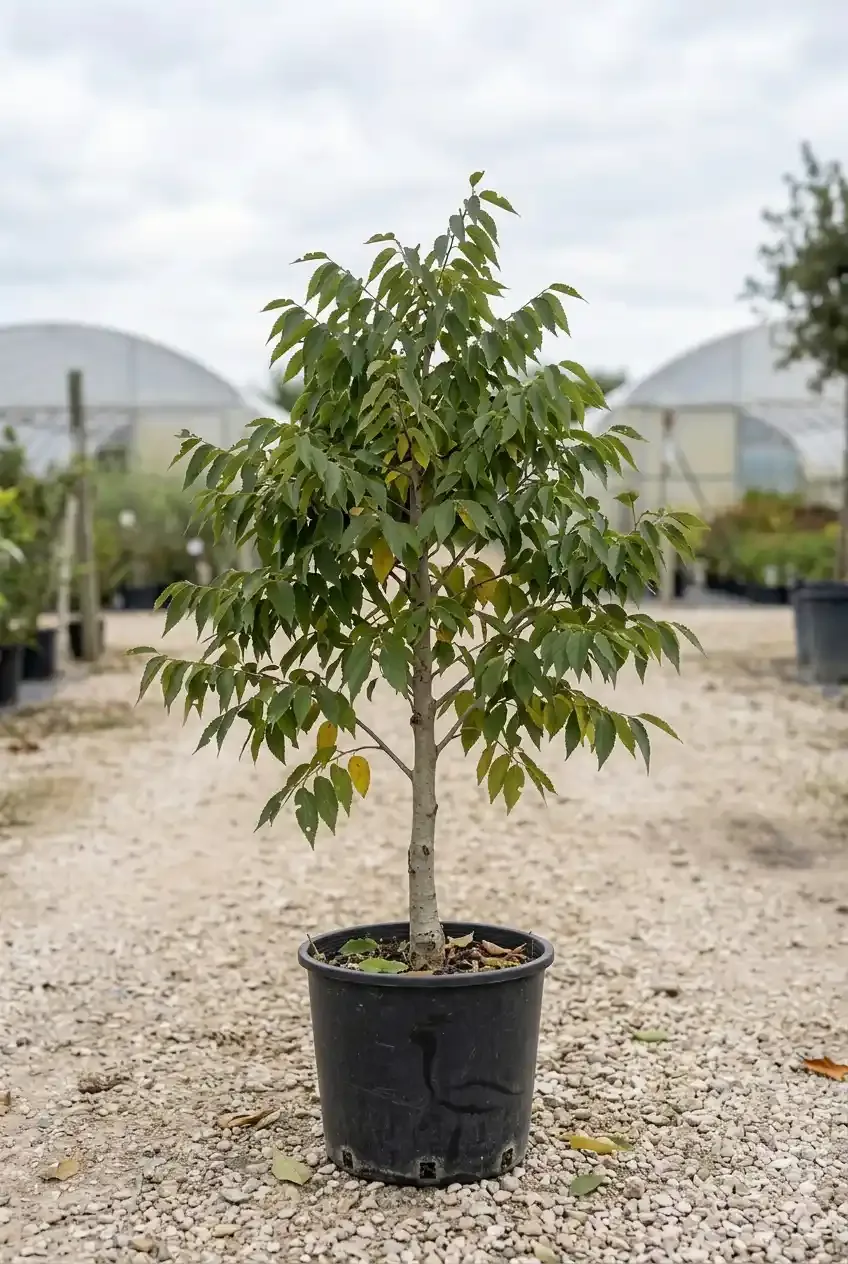
Celtis australis, known as the European nettle tree, is a deciduous tree with a rounded crown and spreading branches. Its shade and foliage texture make it a common feature of the Mediterranean landscape, suitable for large gardens, parks, and sunny open spaces.

It features oval, rough, and serrated leaves that taper to an elongated tip. In spring, it produces small, greenish-yellow flowers that go unnoticed amidst the foliage. Its rounded fruits darken as they ripen, and the leaves may turn a pale yellow before falling in autumn.

It reaches a height of 15 to 25 meters at maturity. It requires full sun and well-drained soil ranging from dry to moderately moist; it needs little watering once established, though supplemental irrigation is beneficial during planting or periods of drought. It has moderate tolerance to atmospheric humidity. With a USDA hardiness rating of 6–9, it withstands winter cold, although particularly severe frosts may cause damage.

At Ornacom we cultivate each specimen directly, guaranteeing a balanced size and abundant flowering from the first years of planting.
Extended species profile

Verified cultivation data, designed so that any visitor can understand at a glance whether the plant is suitable for their climate and garden.

Crop

Exposure

Full sun

Irrigation

ORN-RIEGO 2/5 · low — supplemental irrigation during establishment and drought; allow to partially dry

Soil / moisture

Dry to cool; well drained

Bloom

Discreet

Climate

USDA Hardiness

Zones 6 – 9

Compatible climates

Csa, Csb, Cfa, BSk

Tolerance to humid climate

ORN-HUM 3/5 · medium

Maintenance

Development

ORN-ALT 5/5 · 15–25 m · medium growth

Pests

ORN-PLAGA 3/5 · medium — sucking/boring insects and foliar or root fungi; monitor for water stress

Pass

ORN-FEEDING 2/5 · low — prioritize soil and organic matter; fertilize in spring only according to analysis and vigor

  • Warning

Avoid waterlogging; promotes vigorous roots and fruit retention. May suffer damage from severe cold.

Contact our sales team

Get a quote