Jacaranda mimosifolia

Jacaranda mimosifolia: Characteristics and Care

The Jacaranda mimosifolia, popularly known as jacaranda, is a tree native to South America (Argentina and Bolivia). It is a semi-deciduous tree highly valued for its spectacular bell-shaped, blue-violet blossoms, which cover the canopy before or during the budding of its light, feathery, bipinnate foliage.

Its broad canopy and exceptional flowering make it a highly sought-after option as an urban street tree and an isolated ornamental specimen in mild climates.

It tolerates moderate drought well once established and adapts to various soil types, provided it has good drainage.

At Ornacom we cultivate each specimen directly, guaranteeing a balanced size and vigorous development from the first years of planting.
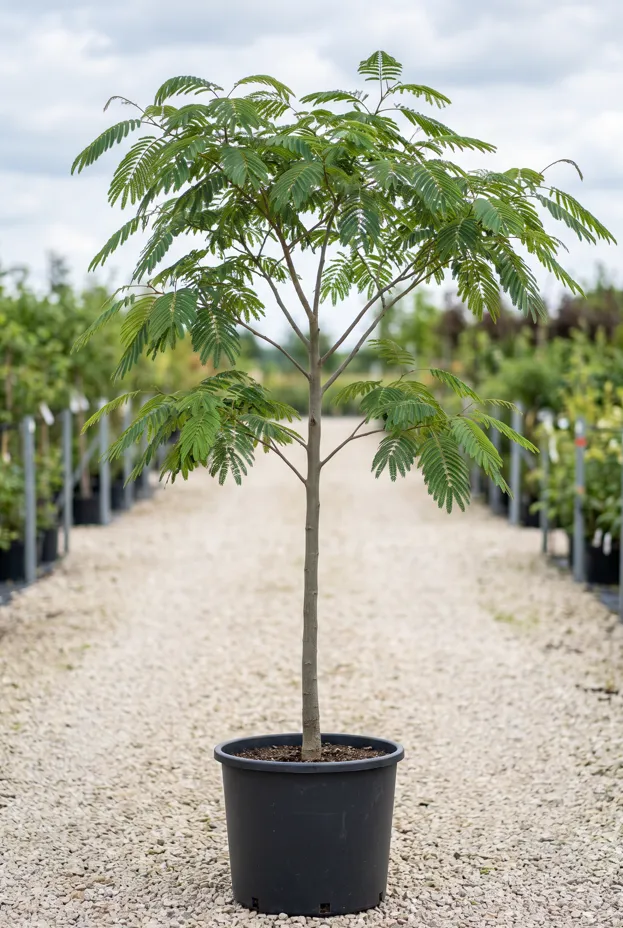
Extended species profile

Verified cultivation data, designed so that any visitor can understand at a glance whether the plant is suitable for their climate and garden.

Crop

Exposure

Full sun

Irrigation

ORN-WATERING 3/5 · medium — regular watering in warm seasons; allow the soil to breathe between applications

Soil / moisture

Fresh; well-drained

Bloom

Summer

Climate

USDA Hardiness

9b–11

Compatible climates

Cwa, warm Cfa, Aw, frost-free Csa

Tolerance to humid climate

ORN-HUM 4/5 · high

Maintenance

Development

ORN-ALT 5/5 · 8–15 m · fast growth

Pests

ORN-PLAGA 3/5 · medium — sucking/boring insects and foliar or root fungi; monitor for water stress

Pass

ORN-FEEDING 2/5 · low — prioritize soil and organic matter; fertilize in spring only according to analysis and vigor

  • Warning

Young specimens are sensitive to frost; excess humidity and low light reduce flowering.

ornacom_albizia julibrissin

Jacaranda mimosifolia: Characteristics and Care

The Jacaranda mimosifolia, popularly known as jacaranda, is a tree native to South America (Argentina and Bolivia). It is a semi-deciduous tree highly valued for its spectacular bell-shaped, blue-violet blossoms, which cover the canopy before or during the budding of its light, feathery, bipinnate foliage.

Its broad canopy and exceptional flowering make it a highly sought-after option as an urban street tree and an isolated ornamental specimen in mild climates.

It tolerates moderate drought well once established and adapts to various soil types, provided it has good drainage.

At Ornacom we cultivate each specimen directly, guaranteeing a balanced size and vigorous development from the first years of planting.

Extended species profile

Verified cultivation data, designed so that any visitor can understand at a glance whether the plant is suitable for their climate and garden.

Crop

Exposure

Full sun

Irrigation

ORN-WATERING 3/5 · medium — regular watering in warm seasons; allow the soil to breathe between applications

Soil / moisture

Fresh; well-drained

Bloom

Summer

Climate

USDA Hardiness

9b–11

Compatible climates

Cwa, warm Cfa, Aw, frost-free Csa

Tolerance to humid climate

ORN-HUM 4/5 · high

Maintenance

Development

ORN-ALT 5/5 · 8–15 m · fast growth

Pests

ORN-PLAGA 3/5 · medium — sucking/boring insects and foliar or root fungi; monitor for water stress

Pass

ORN-FEEDING 2/5 · low — prioritize soil and organic matter; fertilize in spring only according to analysis and vigor

  • Warning

Young specimens are sensitive to frost; excess humidity and low light reduce flowering.

Contact our sales team

Get a quote