Ulmus pumila

Features and care

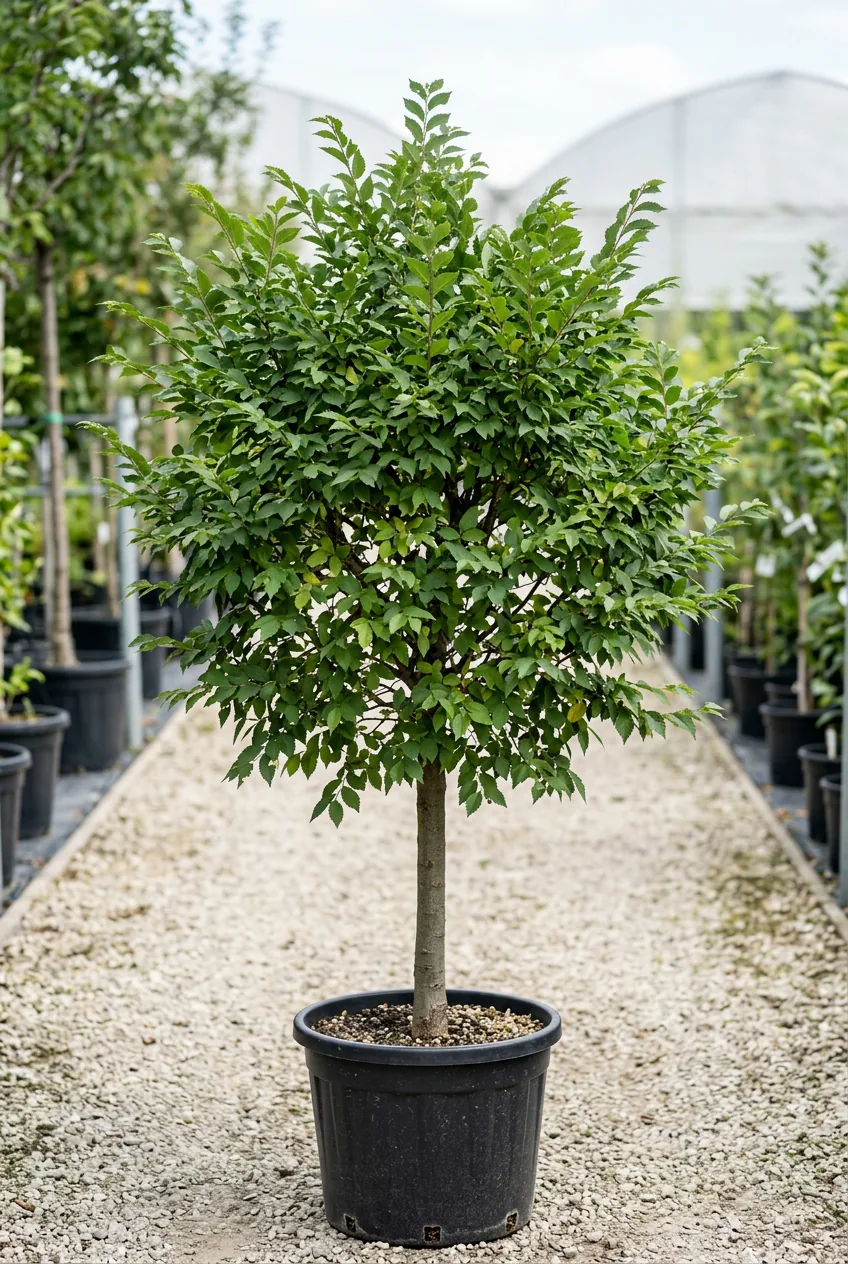
Ulmus pumila, known as the Siberian elm, is a fast-growing deciduous tree with an open, vase-shaped crown. It has been used in windbreaks and shade plantings, historical uses described here without presenting it as a general recommendation for new planting.

The leaves are relatively small, elliptical to lance-shaped, dark green on top and paler underneath. In spring, before the leaves emerge, clusters of greenish or reddish flowers appear. The fruits are rounded, winged samaras; the foliage turns yellow before falling.

It requires full sun and reaches 10 to 20 m. It prefers dry to cool, well-drained ground and low watering, with supplemental water during establishment and droughts. The soil should be allowed to dry out partially between waterings. Its tolerance to humid air is medium and it withstands USDA 3–9 frosts, even in climates with harsh winters.

At Ornacom we cultivate each specimen directly, guaranteeing a balanced size and abundant flowering from the first years of planting.
Extended species profile

Verified cultivation data, designed so any visitor can see at a glance whether the plant suits their climate and garden.

Cultivation

Exposure

Full sun

Watering

ORN-RIEGO 2/5 · low — supplemental watering during establishment and drought; let dry out partially

Soil / moisture

Dry to cool; well drained

Flowering

Inconspicuous

Climate

USDA hardiness

Zones 3 – 9

Compatible climates

BSk, Dfa, Dfb, Cfa

Humid climate tolerance

ORN-HUM 3/5 · medium

Maintenance

Growth

ORN-ALT 5/5 · 10–20 m · fast growth

Pests

ORN-PLAGA 5/5 · very high — Dutch elm disease, bark beetles, elm leaf beetle and other vascular diseases

Fertilising

ORN-ABONO 2/5 · low — prioritise soil and organic matter; fertilise in spring only based on analysis and vigour

  • Warning

Can be invasive; brittle wood and heavy seed production. Resistance to Dutch elm disease is not immunity.

Contact our sales team

Get a quote