Howea forsteriana

Features and care

The Howea forsteriana, known as kentia palm, sentry palm, or Forster’s palm, is an elegant and slender palm of great ornamental value, native to Lord Howe Island, Australia. It forms a single, smooth, erect, and subtly ringed trunk, dark green in color, which darkens with age, crowned by a beautiful canopy of long, arching, pinnate fronds of an attractive dark green and glossy hue with gently drooping leaflets.

Slow-growing but very hardy, it can reach between 33 and 49 feet (10 and 15 meters) in height in its natural habitat, although in cultivation and indoors, it usually remains much more contained. When mature, it produces long, hanging spike-like inflorescences that emerge between the leaves, followed by ovoid green fruits that turn reddish-brown or yellowish when ripe. It is world-renowned and highly valued as an indoor plant for its great adaptability to low light conditions, also being ideal outdoors for shaded patios, terraces, and gardens in temperate, subtropical, or protected coastal climates.

It requires partial shade or bright, indirect light—always avoiding direct sun, which can scorch its leaves—and a soil rich in organic matter, fertile, and with excellent drainage. It tolerates relative lack of light very well, as well as moderate dry indoor air and mild, occasional frosts (down to approximately 27°F / -3°C once mature); watering should be moderate, allowing the top layer of the substrate to dry out between waterings, and reducing it during colder months. It is essential to avoid waterlogging at the base and constant excess water, as its roots are very sensitive to rot.
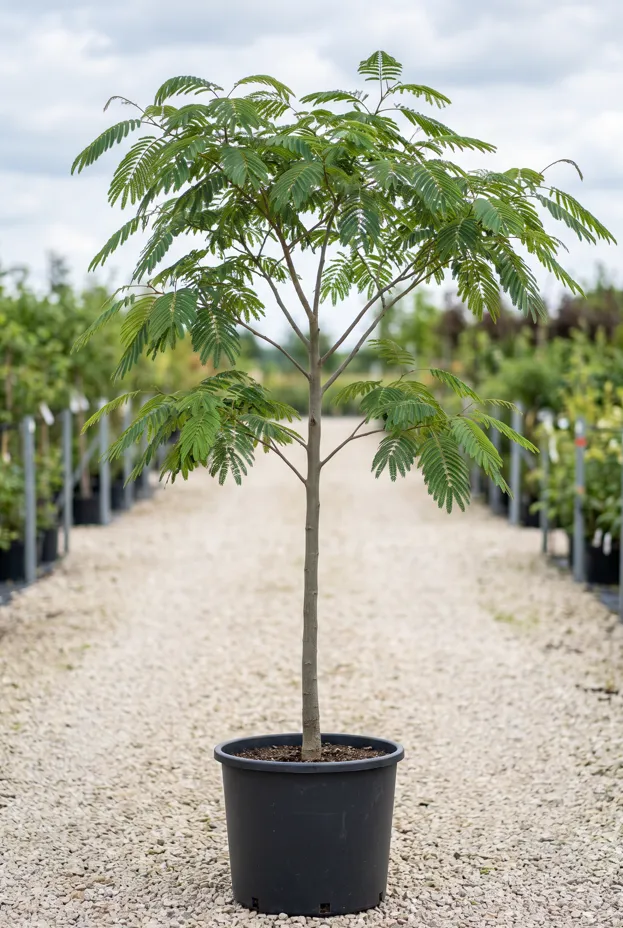
Extended species profile

Verified cultivation data, designed so that any visitor can understand at a glance whether the plant is suitable for their climate and garden.

Crop

Exposure

Full sun

Irrigation

ORN-WATERING 4/5 · high — maintain uniform humidity during heat, always with good drainage

Soil / moisture

Cool to humid; drained

Bloom

Summer

Climate

USDA Hardiness

10b–11

Compatible climates

Cfb subtropical, Cfa warm, Af/Am mild

Tolerance to humid climate

ORN-HUM 5/5 · very high

Maintenance

Development

ORN-ALT 5/5 · 26–49 ft (8–15 m) · slow growth

Pests

ORN-PEST 3/5 · medium — mealybugs, spider mites, thrips, and root rot; lower risk of large borers

Pass

ORN-FERTILIZER 4/5 · high — specific fertilizer for palms with K, Mg, Mn, and micronutrients, split during growth

  • Warning

Very sensitive to frost, intense dry sun, and waterlogging; slow growth.

Contact our sales team

Get a quote