Pinus halepensis

Features and care

The Aleppo pine (Pinus halepensis) is a fast-growing, evergreen conifer characteristic of Mediterranean landscapes. It can reach 15 to 25 meters in height and develops an irregular, broad, and relatively light crown that becomes more open with age. Its slender needles, ranging in color from light green to greenish-gray, grow in pairs and contrast with the ovoid cones, which persist on the branches for several years. It is a species well-suited for large gardens, landscape restoration, windbreaks, and dry coastal areas.

It displays yellowish male flowers and small reddish female structures during spring, which develop into woody cones. Although its main ornamental value lies in its form, foliage texture, and adaptation to the Mediterranean environment, it is also notable for its ability to thrive in poor, rocky, sandy, or calcareous soils. Its rapid response in warm, dry climates explains its historical use in soil stabilization and erosion control, always taking into account its large adult size.
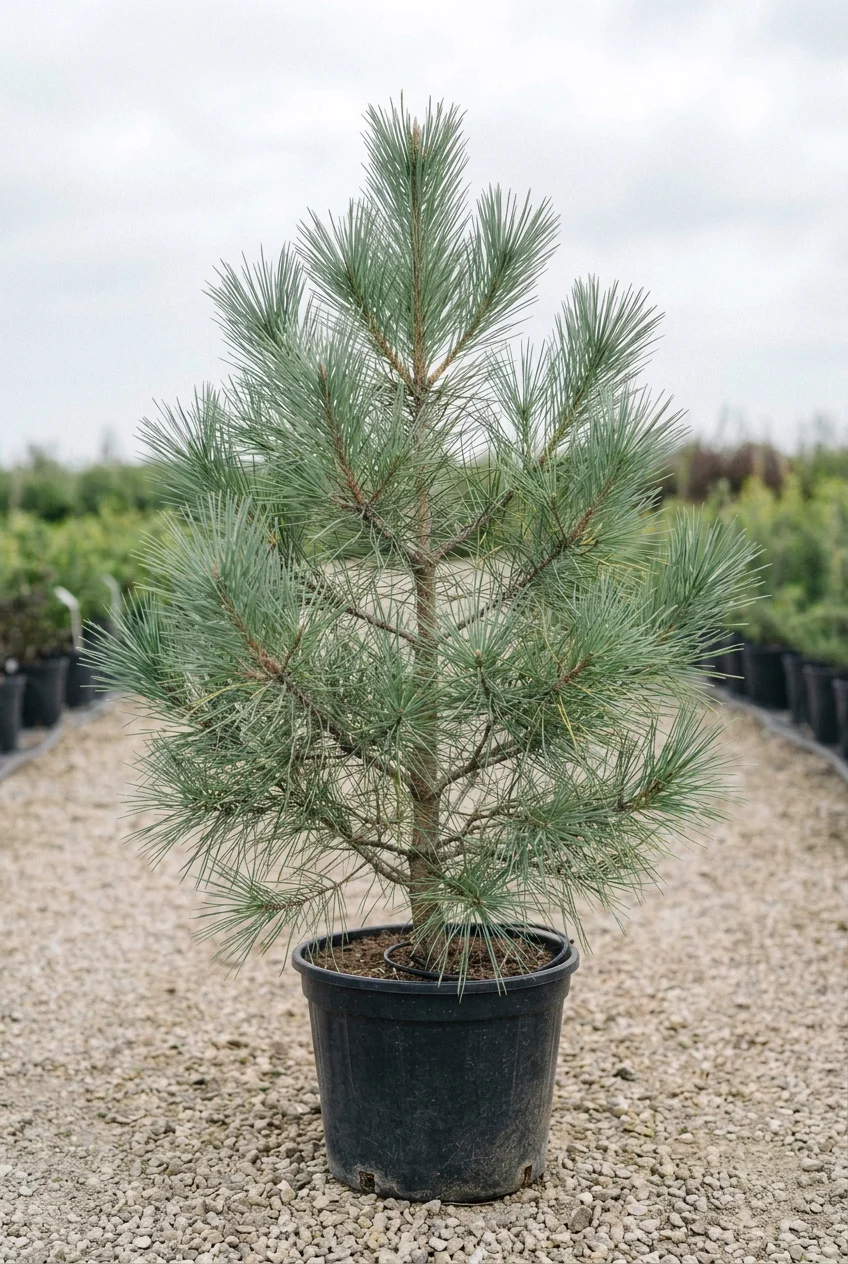
At Ornacom we cultivate each specimen directly, guaranteeing a balanced size and abundant flowering from the first years of planting.

Extended species profile

Verified cultivation data, designed so that any visitor can understand at a glance whether the plant is suitable for their climate and garden.

Crop

Exposure

Full sun

Irrigation

ORN-RIEGO 1/5 · very low — very spaced-out waterings; reduce almost completely in winter

Soil / moisture

Dry; excellent drainage

Bloom

Spring-summer

Climate

USDA Hardiness

8–10

Compatible climates

Csa, Csb, BSh

Tolerance to humid climate

ORN-HUM 1/5 · very low

Maintenance

Development

ORN-ALT 5/5 · 15–25 m · fast growth

Pests

ORN-PLAGA 5/5 · very high — processionary caterpillar, bark beetles, Diplodia and pine nematode as quarantine risk

Pass

ORN-FERTILIZER 1/5 · very low — usually organic matter or slow release in spring is sufficient; avoid excess N

  • Warning

Adapted to dry summers; high humidity and wet soil increase rot. Flammable and potentially invasive.

Extended species profile

Verified cultivation data, designed so that any visitor can understand at a glance whether the plant is suitable for their climate and garden.

Crop

Exposure

Full sun

Irrigation

ORN-RIEGO 1/5 · very low — very spaced-out waterings; reduce almost completely in winter

Soil / moisture

Dry; excellent drainage

Bloom

Summer

Climate

USDA Hardiness

8–10

Compatible climates

Csa, Csb, BSh

Tolerance to humid climate

ORN-HUM 1/5 · very low

Maintenance

Development

ORN-ALT 5/5 · 15–25 m · fast growth

Pests

ORN-PLAGA 5/5 · very high — processionary caterpillar, bark beetles, Diplodia and pine nematode as quarantine risk

Pass

ORN-FERTILIZER 1/5 · very low — usually organic matter or slow release in spring is sufficient; avoid excess N

  • Warning

Adapted to dry summers; high humidity and wet soil increase rot. Flammable and potentially invasive.

Contact our sales team

Get a quote