Features and care
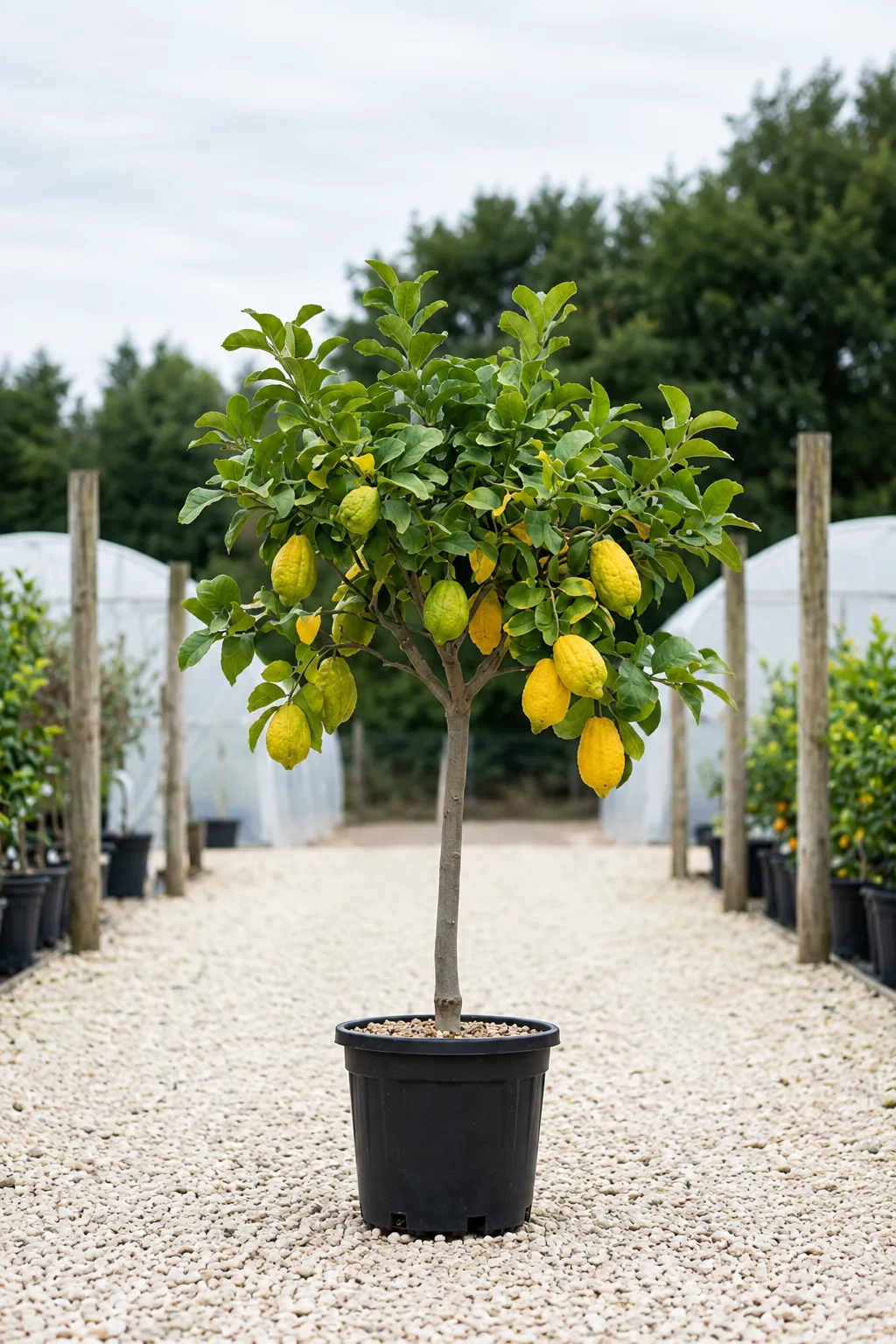
Citrus medica, commonly known as citron, is a small evergreen tree or shrub of great ornamental and fruit value, native to Southeast Asia. It has an open, irregular, and branched structure, with branches that may have thorns and large, oval, deep green leaves. Its main attraction is its fruit, which is large and varies in shape, with a thick, rough, and aromatic rind that can turn yellow as it ripens.
Of moderate growth, it can reach approximately 2 to 5 meters in height, forming a relatively open crown. During spring, it produces fragrant white or slightly violet flowers, which can appear repeatedly in warm climates. Its fruits are large and fleshy, with very little pulp and a thick, aromatic rind, used in baking, confectionery, and preserves. It is widely used as a specimen tree, an ornamental fruit tree, in pots, and in Mediterranean or subtropical gardens.
It requires direct sunlight, and good light exposure is essential for growth and fruiting. It prefers fertile soil, rich in organic matter and with excellent drainage, as it is sensitive to excess moisture at the roots. It needs regular, moderate watering, especially during spring and summer, allowing the soil surface to dry slightly between waterings. It does not tolerate intense and prolonged frosts well, so in cold regions it is advisable to protect it or grow it in a pot to allow for winter shelter. Pruning should be light, mainly to remove damaged branches, control its shape, and maintain a balanced canopy.
15 L
20/25 L
30/40 L
45/50 L